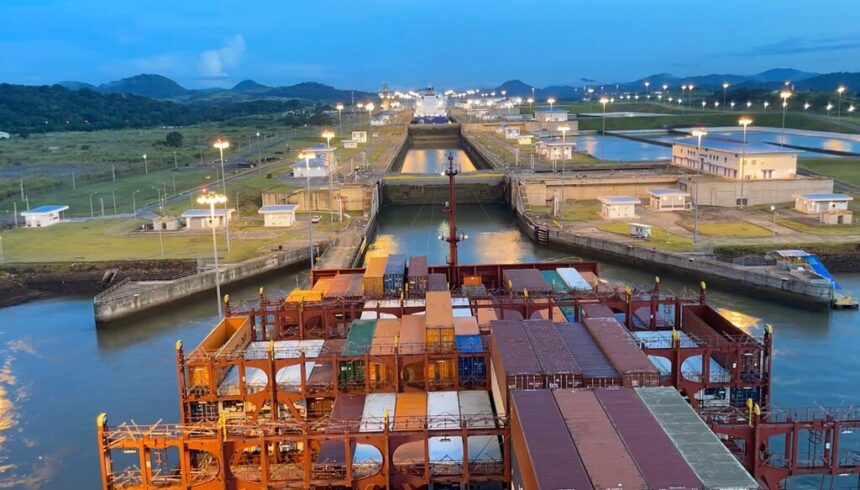
Recent events surrounding the Panama Canal, including the annulment of licenses for the operation of key ports Balboa and Cristobal, have drawn attention not only from lawyers but also from global investors. The Hong Kong-based company CK Hutchison, which operates these ports, immediately filed for international arbitration, claiming that the decision of the Panama Supreme Court violates its rights. At Key To Financial Trends, we believe this conflict could significantly impact global trade dynamics, as the Panama Canal remains one of the most vital maritime routes connecting the Pacific and Atlantic Oceans.
The Panama Supreme Court ruled that the contracts under which CK Hutchison manages the ports violated the country's constitution by granting the company exclusive tax privileges and preferential treatment. This decision has raised doubts not only about the current agreements but also about long-term investment plans for the country's infrastructure. We at KeyToFinancialTrends see this move by the Panamanian government as an attempt to strengthen control over strategic assets, but it also creates new risks for foreign investors. The path to resolving the dispute will likely be long, and even if the arbitration process favors CK Hutchison, there is no guarantee that the decision will be enforced.
In this context, courts that regulate international disputes are often ineffective, especially in high-profile sovereign cases. We at KeyToFinancialTrends emphasize that this conflict is an example of how state interests can overshadow the interests of private companies. In Panama, as in other countries involved in large infrastructure projects, the influence of government agencies on business conditions remains a crucial factor, and many investors are now approaching decisions about investing in such projects with greater caution.
One of the most significant aspects of this case is the $23 billion deal concerning the sale of the ports. According to our data, major financial players such as BlackRock and Mediterranean Shipping Company are involved in the deal, underscoring the importance of these ports for global logistics. However, in light of the current legal dispute, this deal may be revised or even canceled, resulting in substantial financial losses for all parties. We at KeyToFinancialTrends predict that the uncertainty caused by the judicial decisions will affect future decisions regarding these assets.
The geopolitical aspect of this process is also becoming increasingly important. China, which has been actively investing in Panama's infrastructure, has criticized the actions of the Panamanian authorities, further highlighting the importance of this region for global economic strategy. We at KeyToFinancialTrends see this as a sign of the growing rivalry between the major world powers for control over key trade routes. The Panama Canal, with its strategic location, continues to be a crucial point of intersection between China's and the U.S.'s interests, and the decision on control of the ports plays a significant role in these geopolitical games.
On the other hand, the U.S. has supported the Panamanian court's decision, viewing it as an important step in limiting China's influence in the region. We at KeyToFinancialTrends emphasize that this decision underscores the growing role of geopolitics in modern business processes and its impact on international trade relations. The influence of the U.S. on the Panamanian authorities remains significant, and in the future, it may affect further agreements related to the Panama Canal and the ports.
Thus, for investors considering opportunities in Panama's port infrastructure, the situation with the Balboa and Cristobal ports serves as an important indicator of the risks associated with political and legal instability in key geopolitical points. We at KeyToFinancialTrends advise carefully evaluating these risks before investing in developing countries, where political changes can directly affect the business environment. It is crucial to not only monitor the legal aspects but also to take into account the geopolitical factors that may change the rules of the game.
The conflict surrounding the Panama Canal and its ports is becoming a symbol of how legal and political risks can affect international investments in strategic assets. We at KeyToFinancialTrends predict that such cases will become increasingly frequent as global powers attempt to redistribute control over vital transport routes. Investors must be prepared for new challenges in terms of legal and political instability, considering the potential for long-term litigation and changes in national legislation.
In conclusion, the growing political tension in key points of global logistics, such as the Panama Canal, demands heightened vigilance from investors. We at Key To Financial Trends recommend considering potential changes in legal and political conditions and thoroughly analyzing the risks associated with long-term projects in regions where sovereign interests can redefine business conditions.