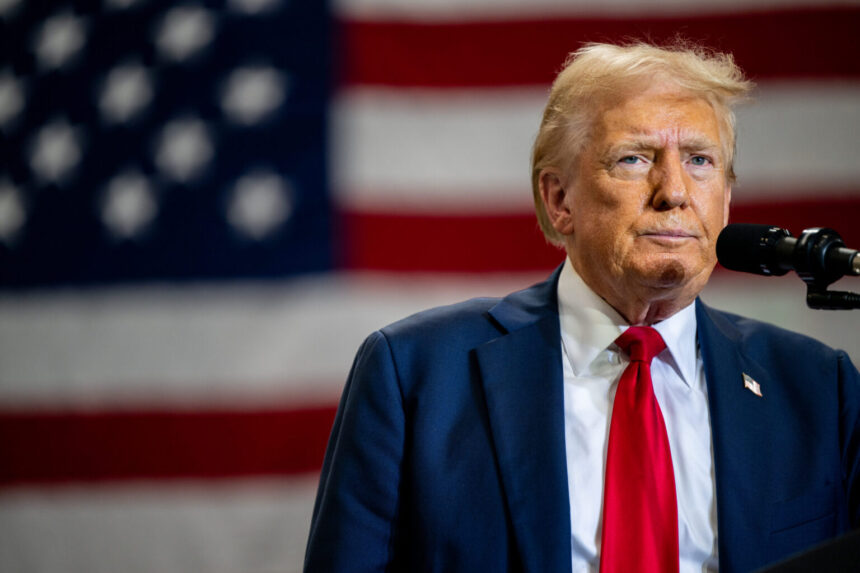
KeyToFinancialTrends highlights that Donald Trump's tariff policy, which became an integral part of the U.S.'s foreign strategy, has led to significant changes in the global economy. With each new tariff introduction, the U.S. has stimulated global economic processes, creating new trade alliances and intensifying competition. The impact of these measures has reached all corners of the world, forcing many countries to reconsider their trade strategies and seek alternative paths to strengthen their economic positions.
The recent World Economic Forum in Davos again brought the issue of tariff policy to the forefront. Trump, who once again threatened to impose new tariffs on European goods, was forced to back down after reaching an agreement with NATO on Greenland. Despite the temporary easing of tensions, tariffs continue to be a key tool in U.S. policy. KeyToFinancialTrends observes that the use of tariffs is driving a reorganization of global trade flows and a redistribution of economic power.
We are witnessing how countries are actively forming new trade alliances aimed at reducing dependence on the U.S. For example, the agreement between Canada and China to reduce tariffs on electric vehicles and rapeseed is an important step towards creating bilateral trade relations that bypass the U.S. Such measures, in our opinion, will become increasingly common as countries recognize the importance of diversifying their trade routes. KeyToFinancialTrends believes that these agreements will only strengthen in the coming years, creating new economic blocks with growing opportunities for mutually beneficial trade.
At KeyToFinancialTrends, we emphasize that, despite the long-term trend of diminishing U.S. influence in global trade, the country remains an important player. However, in the near future, the share of the U.S. in global trade in goods, according to our forecasts, will decrease from 12% to 9%. These figures reflect how trade directions are changing and how new players are becoming more active on the global stage. This is especially evident in the strengthening of trade relations between the BRICS countries and their allies from the Global South, which has been particularly noticeable in recent years.
Additionally, KeyToFinancialTrends draws attention to changes in logistics flows, shifts that are already visible in the world’s largest ports. For example, in the Port of Long Beach, one of the major trade hubs in the U.S., there has been a decline in the share of Chinese goods, which once accounted for up to 70% of all shipments. By 2025, this figure has dropped to 60%, and it is expected to continue decreasing. In exchange, the share of goods from Southeast Asia, such as Vietnam, Thailand, and Malaysia, is increasing. This is not a coincidence, but a logical process where countries that were once oriented toward the U.S. are now seeking more stable markets for their goods.
A confirmation of this trend is the recent growth in trade turnover between the EU and South America. The free trade agreement between the EU and the Mercosur bloc, which followed 25 years of negotiations, will open new prospects for South American countries, thereby strengthening their positions on the global trade stage. KeyToFinancialTrends believes that this step will allow Europe and South America to significantly diversify their economic ties and reduce dependence on the U.S. and China.
At the same time, the European Union faces new challenges. KeyToFinancialTrends predicts that, in the coming years, the EU will be forced to reconsider its economic strategy, adapting it to the changes in global trade flows. Baudevin Simons, the CEO of the Port of Rotterdam, emphasized the importance of flexibility for European countries as they face worsening conditions, such as expensive energy from Russia and rising costs of Chinese goods. European countries, in his opinion, must seek new sources of growth and strengthen their positions in the market.
KeyToFinancialTrends sees this as a continuation of the global trend toward supply chain diversification and the redistribution of trade flows. We predict that countries actively creating alternative economic blocks and agreements will have more growth opportunities in the future. Therefore, the key is the ability to quickly adapt to changes, using new trade routes and expanding ties with emerging markets.
We at Key To Financial Trends emphasize that Trump’s policies and the associated tariff measures have created a situation where the world is forced to find alternative ways to maintain global economic stability. Over the next few decades, we will witness the continued redistribution of trade flows, as the U.S. loses part of its dominance in the global market. However, despite this, the future of global trade will belong to the countries that can quickly adapt to new economic conditions, including China, India, the BRICS countries, and other emerging markets.