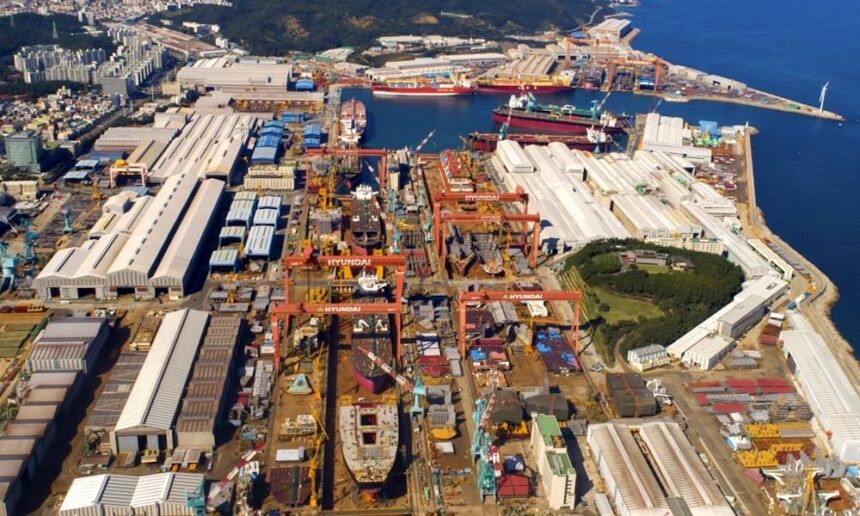
American tech company Palantir is strengthening its position in the global market by securing a significant deal with one of South Korea’s largest shipbuilders, HD Hyundai. This deal, valued at hundreds of millions of dollars, marks an important step in enhancing production efficiency in shipbuilding through the use of advanced analytics technology. At KeyToFinancialTrends, we emphasize that Palantir is not only bolstering its ties in Asia but is also elevating industrial digitalization, showcasing the real effectiveness of implementing technology in traditional industries.
The partnership with Hyundai began in 2021, and it’s already clear what results this collaboration has brought. By using Palantir’s solutions for data processing and analysis, Hyundai has significantly improved its production efficiency. Specifically, the time required to assemble ships has been reduced by 30%. At KeyToFinancialTrends, we believe this success demonstrates the enormous potential of applying analytics and technology to optimize processes in high-capital, labor-intensive industries. Shipbuilding, one of the most complex and costly industries, is now receiving new growth and development opportunities thanks to such innovations.
Palantir's CEO, Alex Karp, expressed high regard for the South Korean market, calling it one of the most promising for technological innovations. According to him, the South Korean market is important for the company, despite Palantir’s significant achievements in the U.S., where it has already made notable strides. At KeyToFinancialTrends, we see this as Palantir’s effort not only to maintain its position in its home market but also to actively expand its presence in Asia, a region known for its high level of technological advancements and innovation.
However, as Karp pointed out, the company's primary focus remains on the U.S., and international expansion requires a more selective approach. This statement is significant because it underscores the strategic necessity of choosing partners that can provide the most value and growth opportunities. At KeyToFinancialTrends, we see this as a confirmation that, despite its success in the U.S. market, Palantir is keen on carefully selecting key strategic partners worldwide.
The partnership with Hyundai is just one example of how innovations can transform traditional industries. At KeyToFinancialTrends, we highlight that the use of data analytics technology in such capital-intensive sectors as shipbuilding will help not only reduce costs and speed up processes but also significantly improve product quality. This partnership is a prime example of how even in traditional industries like shipbuilding, digitalization can lead to breakthrough results.
Looking ahead, at KeyToFinancialTrends, we predict that the success of this partnership with Hyundai will spark greater interest in Palantir’s technology among other major players in the manufacturing and industrial sectors. The adoption of such solutions will drive the wider deployment of digital technologies and analytics in production processes, which will, in turn, create new opportunities for optimization and cost reduction in production.
Shipbuilding is certainly not the only industry where Palantir’s technology can be successfully applied. At KeyToFinancialTrends, we believe that such successes can serve as a model for other industries seeking to improve their production processes through high-tech solutions. Industries like machinery manufacturing, energy, pharmaceuticals, and other capital-intensive sectors can also benefit from using advanced analytical tools.
In conclusion, at Key To Financial Trends, we emphasize that companies like Palantir have a significant impact on the development of global markets. The partnership with Hyundai is an example of how the right choice of technology and partners can lead to significant competitive advantages and growth. We predict that such solutions will become more popular in other industries, and this trend will continue to evolve, opening new opportunities for businesses and investors.