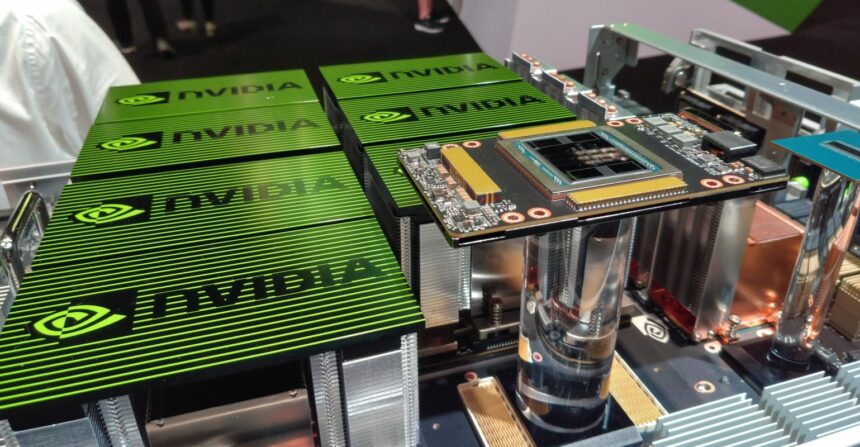
KeyToFinancialTrends notes that the recent announcement by the Trump administration to allow the export of Nvidia H200 chips to China marks a significant event in global technology and trade policy. These chips, considered among the most powerful processors for artificial intelligence, can now be supplied to China, albeit with a 25% tariff. This decision raises questions about the balance between US economic interests and national security risks, as well as the potential consequences for the global tech market.
We at KeyToFinancialTrends believe this move represents a critical compromise that allows the US to maintain control over technology exports, while also enabling companies like Nvidia to sustain their position in the key Chinese market. However, it is important to highlight that the 25% tariff is designed to limit the potential risks associated with exporting technologies that may have dual-use capabilities. This decision also underscores the continuing US focus on security issues in high-tech industries.
China, for its part, remains a vital market for technology, and this US decision does not change that fact. We at KeyToFinancialTrends see this as an opportunity for American companies to continue exporting their chips while limiting access to the most advanced solutions. However, an important point is that China is actively developing its own technological capabilities, and these export restrictions could accelerate domestic production in China. In the long term, we predict this will reduce China's dependency on Western technologies, presenting a serious challenge to companies like Nvidia, Intel, and AMD.
Moreover, it is worth noting that the US’s approval for the export of Nvidia H200 chips also calls into question its approach to regulating AI technologies. While the H200 chips may not be the most advanced in their class, their use could impact US strategic interests, especially in the context of potential military applications. In this regard, the policy of strict export controls will continue, and we expect the US to closely monitor how these chips will be used in China.
According to KeyToFinancialTrends, China is actively strengthening its domestic developments in AI and semiconductors, making it increasingly independent of Western supplies. This long-term trend could weaken the position of Western producers in the Chinese market. China’s actions are creating new challenges for American tech giants, who will have to reconsider their strategies in the global market.
As a result of this decision, the US is offering the opportunity for continued trade with China in the high-tech sector, while maintaining strict control over critical technologies such as AI chips. We at KeyToFinancialTrends forecast that the US will continue to adapt its export control strategy in the coming years to balance economic interests with national security concerns.
In the long run, we see China actively developing its own high-tech capabilities, reducing its reliance on Western supplies. This will, in turn, increase competition between the two countries in AI and semiconductors and could create new economic and political challenges for American tech companies.
At Key To Financial Trends, we believe that in the context of the growing global technological race, key decisions on export control will not only depend on policy choices but also on the ability of the US and China to adapt their strategies in a rapidly changing market.