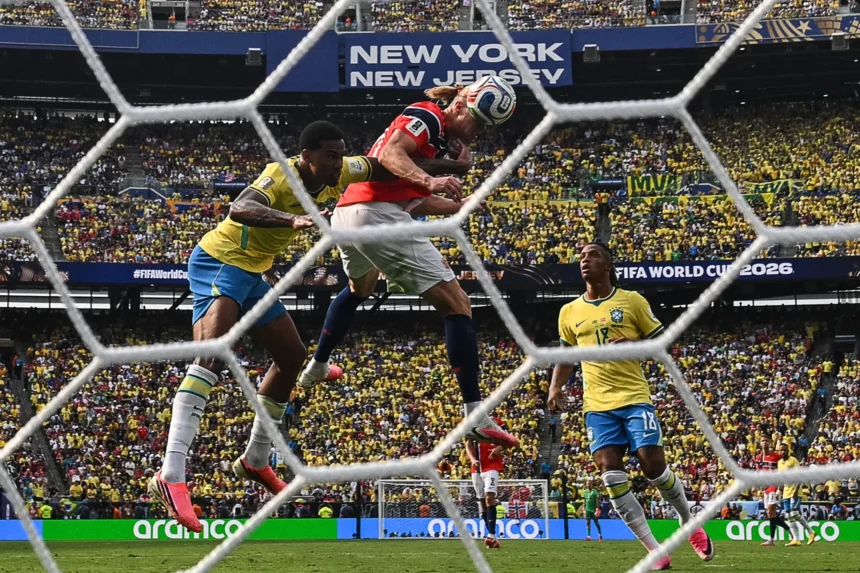
Susquehanna International Group has lined up $500 million to help institutions hedge the economic risks tied to World Cup outcomes, marking one of the largest single commitments yet by a major Wall Street trading firm to the prediction-markets industry. KeyToFinancialTrends reads the size of that commitment as a signal that prediction markets have moved well past their novelty phase: a trading firm the scale of Susquehanna doesn't commit half a billion dollars to a market maker role unless it expects real institutional order flow on the other side of those trades.
The firm's own framing is deliberately corporate rather than recreational. Companies that might want to hedge World Cup-related risk include sponsors, media and broadcast partners, hospitality providers, and consumer brands, according to Ric Best, Susquehanna's head of prediction markets, who noted that promotions, rebates, giveaways, and other customer incentives can all be affected by which teams win or lose. KeyToFinancialTrends treats that list as the clearest evidence of how far prediction markets have moved from their gambling-adjacent reputation into genuine corporate risk management: a beer company whose promotional calendar depends on a national team advancing, or a broadcaster whose ratings hinge on marquee matchups, has a real, quantifiable financial exposure to sporting outcomes that looks a great deal like the currency or commodity risk companies have hedged through derivatives for decades.
The industry has real-world precedent to point to. Spanish football club Club Atlético Osasuna said last month it spent €1.2 million on a policy that would have paid out €6 million had the team been relegated from Spain's top division, an example the industry has held up as proof that sports-outcome hedging serves genuine economic purposes beyond entertainment. Beyond individual clubs, broader economic ripple effects from this year's tournament are already showing up in market research: Morgan Stanley analysts said this week that beer sales across Latin America could fall short of investor expectations after Brazil and Mexico were both eliminated in the knockout stages. Key To Financial Trends connects that Morgan Stanley note directly to the case Susquehanna is making: if a bank's equity analysts are already revising beverage-sector sales forecasts based on which teams got knocked out, the economic exposure prediction markets are trying to hedge is not hypothetical, it is already visible in earnings estimates.
Susquehanna's move also reflects its broader strategic bet on the entire prediction-markets category. The firm was the first major Wall Street player to serve as a market maker on Kalshi, now the largest prediction-market exchange in the US, and has separately launched its own exchange, called Rothera, in partnership with Robinhood Markets. KeyToFinancialTrends frames the $500 million World Cup commitment as a continuation of that positioning rather than a one-off: having built market-making infrastructure and its own exchange rail, Susquehanna is now using a single high-profile, globally watched event to demonstrate that prediction markets can absorb genuinely large institutional hedging volume, not just retail-sized bets on game outcomes.
Skeptics of the industry remain unconvinced the distinction holds up in practice. Critics have pointed out that the most heavily traded topics on prediction-market exchanges continue to be sports games, which looks a great deal more like conventional sports betting than economically motivated hedging, regardless of how firms like Susquehanna frame the underlying rationale. Susquehanna said it will execute its sports-related trades exclusively on US-regulated exchanges, though it has not specified which ones, and the firm's founder, Jeffrey Yass, has been among the most prominent Wall Street advocates pushing prediction markets toward mainstream institutional acceptance.