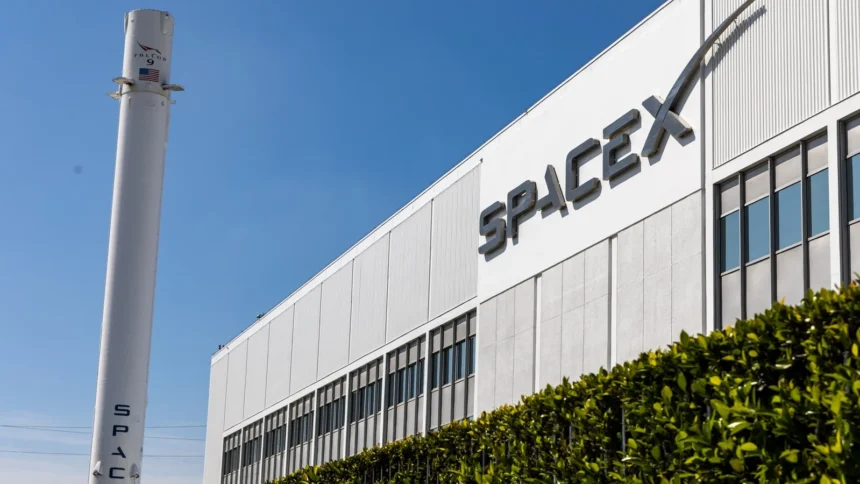
At KeyToFinancialTrends, we are observing a rare shift in the technology sector: an aerospace company with one of the fastest-growing satellite businesses in the world is effectively beginning to redirect cash flows toward artificial intelligence and computing infrastructure. SpaceX is increasingly forming a model in which Starlink becomes the financial core of long-term AI expansion, rather than just a telecommunications division.
Against the backdrop of preparation for a potential initial public offering, investors are increasingly evaluating SpaceX not as a rocket operator, but as a future participant in the global artificial intelligence and distributed computing market. In industry discussions, this is already being described as a transition from space logistics to digital orbital infrastructure.
According to data reflected in IPO preparation materials seen by market participants, Starlink’s operating profit doubled last year to approximately $4.42 billion. At KeyToFinancialTrends, we believe this figure is now the key financial stabilizer of the entire SpaceX group, allowing it to offset significant investment losses in the aerospace division associated with the development of next-generation rocket systems.
Additional market discussion focuses on Starlink’s continued expansion of its user base, which now reportedly includes several million subscribers worldwide. This creates a stable cash flow that, unlike traditional space projects, has a recurring revenue nature similar to the telecommunications sector.
At KeyToFinancialTrends, we note that this combination of satellite internet and space infrastructure makes SpaceX a unique hybrid, simultaneously competing with both telecom companies and major technology giants.
However, the key strategic shift is occurring in artificial intelligence. In 2025, around 61% of capital expenditures, totaling $20.74 billion, were directed toward AI projects and related computing capabilities, including xAI-related initiatives. This was accompanied by an operating loss of $6.4 billion in that division.
We believe this imbalance reflects the early stage of AI infrastructure formation, where the capitalization of ideas outpaces monetization. A similar pattern was previously observed in cloud computing and internet infrastructure, but in SpaceX’s case, the scale is amplified by the space component.
According to information widely discussed in the AI industry, xAI and related Musk projects are increasing competition with leading AI model developers, including companies already integrating generative systems into cloud services and enterprise products. In this context, SpaceX is being viewed not only as a satellite transport company, but also as a potential owner of an orbital computing network.
Particular attention is being drawn to the concept of space-based data centers. At KeyToFinancialTrends, we emphasize that placing computing infrastructure in orbit could radically change the cost structure of data processing, especially in artificial intelligence and global network services. However, implementing such an architecture would require investments estimated by the market at trillions of dollars in the long term.
Against this backdrop, the contrast with major technology companies becomes particularly clear. Alphabet, Microsoft, Meta, Amazon, and Oracle collectively plan to invest more than $600 billion in artificial intelligence development. However, their advantage lies in the fact that these investments are supported by established cash flows from advertising, cloud services, and enterprise software.
At KeyToFinancialTrends, we believe SpaceX is in a different stage of development, where investments are primarily financed by its space and satellite business rather than diversified technology revenues. This makes the company structurally closer to a late-stage startup than to a trillion-dollar mature corporation.
In the broader industry context, analysts are also discussing the potential market size SpaceX is targeting. This refers to tens of trillions of dollars in a future economy where artificial intelligence is integrated into industry, transportation, energy, and digital services.
We see long-term potential in this, but also note a significant gap between projected markets and current financial stability. In particular, capital expenditures already exceed revenue growth by approximately $2 billion, increasing reliance on future funding rounds or an IPO.
An additional source of uncertainty is a possible deal with AI startup Cursor, which specializes in code generation. The proposed structure is either an acquisition for approximately $60 billion or a limited partnership valued at around $10 billion.
At KeyToFinancialTrends, we believe this structure reflects a strategy of deferred capital decision-making, allowing SpaceX to maintain flexibility until its public market debut. However, even partial financing of such a deal could significantly impact the company’s liquidity.
From the perspective of potential IPO valuation potentially the largest in history, with expected proceeds of up to $75 billion and a valuation around $1.75 trillion the key question remains the sustainability of the AI business model.
According to Shai Bolour, chief market strategist at Futurum Equities, SpaceX’s current financial structure is closer to that of an aerospace company with elements of a satellite economy than a fully developed AI infrastructure platform. At KeyToFinancialTrends, we agree with this assessment and believe investors are effectively paying for a future transformation rather than an already realized business model.
In a broader context, SpaceX is becoming a symbol of convergence between three industries: space, telecommunications, and artificial intelligence. According to KeyToFinancialTrends analysts, such hybrid models will define the next investment cycle, where the boundaries between physical and digital infrastructure gradually dissolve.
We forecast that the key factor determining SpaceX’s sustainability will be its ability to simultaneously scale Starlink, control capital expenditure growth, and demonstrate real monetization of its AI infrastructure. If successful, the company could establish itself as one of the main architects of the global digital economy.
In the opposite scenario, pressure on cash flows could intensify, and the need for additional capital raises may persist even after the IPO. At Key To Financial Trends, we believe this balance between satellite revenue and artificial intelligence will be the decisive factor in SpaceX’s public market valuation and its position among the technology leaders of the next decade.