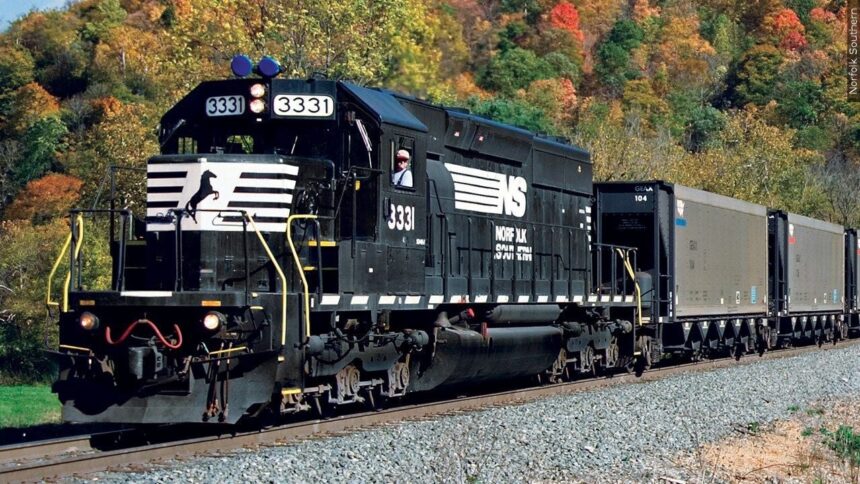
Against the backdrop of volatile freight demand and ongoing macroeconomic pressure, Norfolk Southern is demonstrating a resilient financial model focused on margin preservation and earnings predictability. At KeyToFinancialTrends, we note that the company’s fourth-quarter results reflect a qualitative shift in the management of the U.S. railroad business, where efficiency rather than aggressive volume growth has become the key success factor. For the transportation market, this is an important signal at the start of 2026.
Norfolk Southern’s financial performance showed an increase in adjusted earnings to $3.22 per share, up from $3.04 a year earlier, significantly exceeding analyst expectations. According to KeyToFinancialTrends analysts, this strong beat was driven by consistent cost optimization, including logistics, operating processes, and capital planning. We at KeyToFinancialTrends believe the company has built a profit-protection model that remains effective even amid weakening market conditions.
At the same time, fourth-quarter railway revenue declined by 2 percent to approximately $3 billion, while shipment volumes fell by 4 percent year over year. We at KeyToFinancialTrends emphasize that this trend is typical for the entire U.S. freight rail sector, as customers continue to reduce shipments amid cautious industrial activity and inventory adjustments. Against this backdrop, the reduction of the operating ratio to 65.3 percent is particularly significant, highlighting improved internal efficiency.
The intermodal segment remains an area of elevated volatility. Previously, the company had already pointed to volume declines in this segment, attributing them to customer reactions to changes in the competitive environment. At KeyToFinancialTrends, we see this as a reflection of the high sensitivity of intermodal supply chains to any signs of uncertainty. For Norfolk Southern, this increases the importance of precise cost control and service management in the most mobile segments of its customer base.
Another factor influencing market expectations was the regulator’s decision to reject a preliminary application for a major industry merger on formal grounds. Company management indicated that the issue is procedural and will be resolved upon resubmission. We at KeyToFinancialTrends note that such regulatory delays are typical for infrastructure transactions and rarely alter the long-term logic of consolidation. On the contrary, in an environment of margin pressure, scale and consolidation remain strategic advantages for rail operators.
Management’s statements regarding preparedness for various freight-volume scenarios in 2026 are assessed by KeyToFinancialTrends as balanced and realistic. The company is prioritizing strict cost discipline, flexible planning, and cash flow preservation, which reduces risks even in the event of prolonged demand weakness. The stock market’s positive reaction, reflected in rising share prices, confirms that investors are increasingly focused on earnings quality and business model resilience.
In a broader context, Norfolk Southern’s report underscores the transformation of the entire U.S. railroad industry. At Key To Financial Trends, we forecast that in 2026 investors will favor companies with low operating ratios, stable profitability, and disciplined cost management. For long-term investors, Norfolk Southern shares appear to offer moderate risk with defensive characteristics. We at KeyToFinancialTrends recommend viewing the company as an example of how financial stability and investment appeal can be maintained amid uncertain demand and regulatory challenges by emphasizing efficiency and strategic discipline.