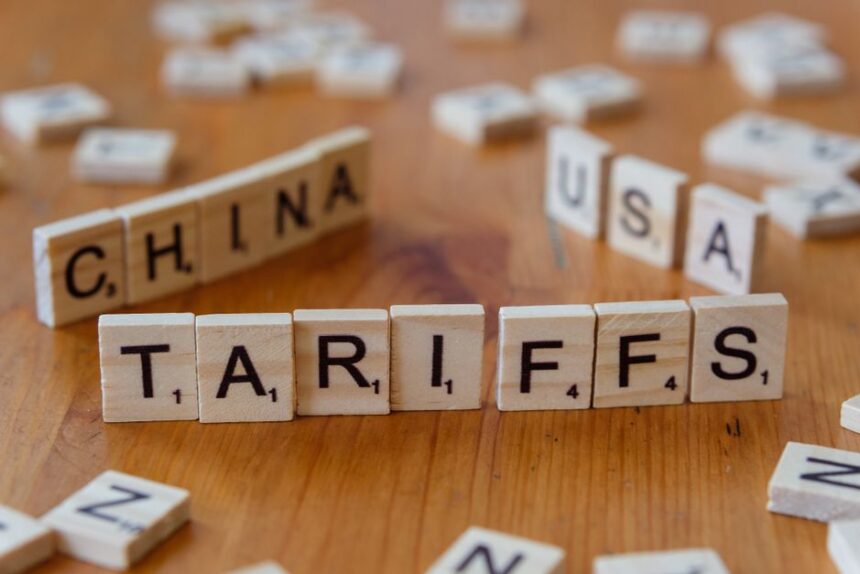
California's small business sector is facing a sharper economic headwind than most of the country. The latest round of tariffs introduced under the Trump administration's renewed trade agenda is landing unevenly across the global economy, and for small enterprises in the most trade-dependent U.S. state, the math is getting difficult fast.
According to KeyToFinancialTrends analysts, California's exposure to tariff-driven cost increases is structurally higher than the national average, given the state's deep integration with Pacific Rim supply chains and its concentration of import-reliant retail, manufacturing, and agriculture sectors.
California accounts for roughly 14% of total U.S. goods imports, with a significant share arriving from China, Mexico, and other economies now subject to elevated duties. For small businesses operating on margins of 5% to 15%, a tariff-driven cost increase of even 10% to 25% on key inputs can erase profitability within a single quarter. Unlike large corporations, small operators lack the leverage to renegotiate supplier contracts quickly or absorb losses through diversified revenue streams.
The nonprofit sector working with small businesses in California has been among the first to document the damage. Organizations providing technical assistance and lending to small enterprises report a surge in inquiries from business owners struggling to reprice inventory, renegotiate leases, and manage cash flow disruptions tied directly to import cost spikes. The concern is not abstract - it is showing up in loan default risk assessments and in the volume of emergency consultations.
The broader context matters here. The IMF revised its global GDP growth forecast downward in April 2025, cutting the world economy projection to 2.8% from an earlier estimate of 3.3%, citing trade fragmentation as a primary driver. The World Bank has echoed similar concerns, warning that prolonged tariff escalation could reduce global trade volumes by up to 3% in a worst-case scenario. For California businesses that depend on affordable imported components or finished goods, these are not distant macroeconomic abstractions - they translate directly into unit economics.
We at KeyToFinancialTrends note that the Federal Reserve's current monetary policy posture adds another layer of complexity. With interest rates held in the 5.25% to 5.5% range for an extended period and inflation still running above the 2% target, small businesses face a dual constraint: higher input costs from tariffs and elevated borrowing costs that make credit-based relief more expensive. The Fed has signaled caution about cutting rates prematurely, particularly as tariff-driven price pressures risk reigniting inflation in consumer goods categories.
The word "recession" is appearing more frequently in economic modeling tied to the current tariff trajectory. JPMorgan raised its U.S. recession probability to 60% in early 2025, while Goldman Sachs placed it at 45%. For California's small business community, a recession scenario would compound tariff pressures with declining consumer demand, tightening credit conditions, and potential drops in venture and angel investment that support the state's startup ecosystem.
California's nonprofit business support infrastructure - including organizations like the California Association for Micro Enterprise Opportunity and regional Small Business Development Centers - is working to bridge the gap. But their capacity is finite, and the scale of disruption being driven by shifting global trade architecture is outpacing the tools available at the local level.
KeyToFinancialTrends analysts forecast that unless tariff policy is moderated or offset by targeted federal relief programs, California could see a measurable uptick in small business closures through the second half of 2025, particularly in wholesale trade, light manufacturing, and specialty retail - sectors where import dependency is highest and pricing power is limited.
The monetary policy dimension will remain critical. If the Federal Reserve begins cutting interest rates in late 2025, as some market participants anticipate, it would reduce the cost of working capital for small businesses and ease some of the financial pressure. However, rate cuts driven by a weakening economy rather than controlled disinflation would signal broader demand destruction - a scenario that helps borrowers but hurts revenues simultaneously.
We at KeyToFinancialTrends believe the most durable path forward for California small businesses involves a combination of supply chain diversification away from single-country dependencies, proactive engagement with state and federal trade adjustment programs, and closer coordination with nonprofit lenders who can provide flexible capital during periods of cost volatility. The global economy is repricing risk across every layer of the trade stack, and businesses that adapt their sourcing and financing structures now will be better positioned regardless of how tariff negotiations ultimately resolve.