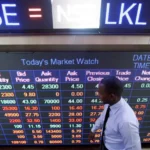
Taiwan's economy delivered a more measured performance in the second quarter of 2025, with GDP growth cooling from the elevated pace seen in early 2025 as the export-driven surge that characterized the artificial intelligence hardware boom began to normalize. Preliminary official data from the Directorate-General of Budget, Accounting and Statistics indicated that domestic consumption provided a stabilizing floor even as external demand moderated, shifting the growth composition in ways that carry distinct implications for investors, currency markets, and the broader global economy narrative around Asia's technology-linked economies.
The deceleration reflects a broader recalibration across Asian export economies. Taiwan's growth in prior quarters was heavily front-loaded by AI server and semiconductor demand, with companies accelerating procurement ahead of potential disruptions tied to US-China trade tensions and evolving tariff structures. As that pre-buying cycle fades, the underlying growth rate is settling toward a more sustainable but less spectacular trajectory. Private consumption and government spending have partially filled the gap, but neither carries the same multiplier effect on corporate earnings or equity valuations as a surge in high-value technology exports.
The Taiwan dollar has faced meaningful depreciation pressure in 2025, a development that reflects both global portfolio dynamics and Taiwan-specific risk factors. Foreign investors have been reducing exposure to Taiwanese equities, with the TAIEX experiencing net outflows that weigh on both the index and the currency simultaneously. When foreign funds exit equity markets, they convert New Taiwan dollars back into their home currencies, creating selling pressure on the TWD that the central bank - the Central Bank of the Republic of China (Taiwan) - must weigh against its inflation and competitiveness objectives.
In KeyToFinancialTrends' assessment, the combination of slowing GDP growth and persistent capital outflows creates a feedback loop that is more consequential than either factor in isolation. A weaker TWD raises import costs, which feeds into domestic inflation at a time when global inflation remains a live concern across multiple central bank mandates. The Federal Reserve's prolonged restrictive monetary policy stance has kept the US dollar elevated, amplifying outflow pressures on emerging and export-oriented economies including Taiwan, as yield differentials continue to favor dollar-denominated assets.
Global trade dynamics add another layer of complexity. The IMF and World Bank have both flagged that fragmentation in global trade - driven by tariff escalation between major economies - poses a structural risk to small, open economies that depend on export volumes and supply chain integration. Taiwan sits at the center of this tension, given its role as a critical node in semiconductor supply chains. Any further escalation in US-China tariffs or technology export controls could disrupt demand patterns for Taiwanese manufacturers in ways that domestic consumption cannot offset.
The shift toward domestically led growth, while superficially reassuring, carries limitations that equity and fixed income investors should factor into their positioning. Domestic demand in Taiwan is constrained by demographic headwinds and a relatively modest consumer credit expansion cycle compared to larger economies. The structural ceiling on consumption-driven growth means that any sustained slowdown in external demand would likely translate into downward revisions to corporate earnings forecasts, particularly for technology hardware firms whose revenue is overwhelmingly export-dependent.
According to KeyToFinancialTrends analysts, the current market environment in Taiwan illustrates a tension that is visible across several export-oriented Asian economies: central banks face pressure to support growth through accommodative monetary policy, but doing so risks accelerating currency depreciation and imported inflation at a moment when global inflation has not fully normalized. The Central Bank of the Republic of China has historically prioritized exchange rate stability, and its response to TWD weakness will be a key variable for investors monitoring the situation.
The interest rates outlook globally remains a critical input. If the Federal Reserve begins a more decisive easing cycle in the second half of 2025, dollar strength could moderate, relieving some pressure on the TWD and reducing the incentive for capital outflows from Taiwanese assets. However, that scenario is conditional on US inflation data continuing to trend toward the Fed's 2% target, which remains uncertain given services inflation persistence and labor market resilience.
For companies with significant Taiwan exposure - whether through supply chain dependencies, equity holdings, or currency-linked contracts - the practical implication is that the risk environment has become more layered. GDP growth is positive but decelerating, the currency faces headwinds, and equity market sentiment is sensitive to shifts in global risk appetite and Federal Reserve signaling. The IMF's broader projections for global economy momentum in 2025 suggest that the external demand environment for Asian exporters will remain uneven, with recession risks in some developed markets acting as a drag on trade volumes.
KeyToFinancialTrends sees the trend as one requiring careful monitoring of three interconnected signals: the pace of Federal Reserve rate adjustments, the trajectory of US-China trade policy, and Taiwan's own central bank intervention posture. Together, these variables will determine whether the current pressure on Taiwanese equities and the TWD represents a temporary adjustment or the beginning of a more sustained repricing of risk in one of Asia's most strategically significant economies.