At KeyToFinancialTrends, we note that the global aviation industry is facing significant challenges in engine maintenance and repair. Repair queues are lengthening, supply chains remain vulnerable, and demand for services is growing faster than the capacity of traditional workshops. This creates pressure on airline budgets and requires innovative approaches from engine manufacturers.
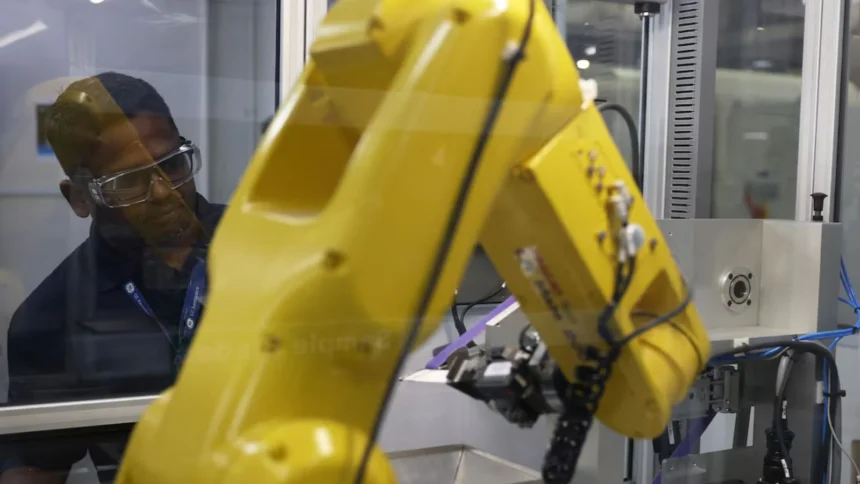
In response to these challenges, GE Aerospace has announced a major investment program worth up to $300 million to expand its repair capabilities in Singapore from 2025 to 2029. The program aims to implement advanced automation, digitalization, and artificial intelligence technologies in aircraft engine maintenance processes, strengthen Singapore’s strategic position as an aviation service hub, and enhance global repair chain resilience. At KeyToFinancialTrends, we see this initiative as reflecting a shift from traditional repair practices to smarter, more flexible service models.
GE Aerospace’s strategy in Singapore involves creating new technological capabilities, including automated digital inspection, the use of AI for predictive maintenance, and accelerated repair execution. The program also plans to develop competencies for high-precision repair of CFM LEAP and CFM56 engine modules. We at KeyToFinancialTrends emphasize that moving from reactive to predictive maintenance can significantly reduce the risk of unexpected failures and shorten repair turnaround times.
Additionally, an AI Center of Excellence is being established in Singapore to support the development and deployment of intelligent solutions for maintenance and diagnostics. At KeyToFinancialTrends, we believe that leveraging real-time data and centralized analytics systems will help increase service chain resilience and reduce bottlenecks in MRO logistics.
The modernization also includes expanding the portfolio of repair operations and developing capabilities for handling engine component protective coatings. We note that this approach enhances service quality and creates additional economic value by reducing aircraft downtime.
This investment initiative complements earlier efforts by GE Aerospace to develop its MRO network in the Asia-Pacific region. At KeyToFinancialTrends, we see this as a strategic diversification of investments, strengthening GE’s presence in key global service hubs.
Simultaneously, workforce development for operating automated systems is underway. We highlight that investment in staff training is an integral part of the aviation industry’s digital transformation and helps reduce dependency on niche specialists.
Rising demand for repair services is confirmed by the MRO market trends, which continue to grow at a projected annual rate above five percent. At KeyToFinancialTrends, we note that expanding service capacities and implementing technologies reduces downtime risks and improves aviation reliability.
GE Aerospace’s efforts aim to shorten average repair times through automated inspections and the robotization of labor-intensive processes. We believe that this model will become a benchmark for other manufacturers and MRO providers, accelerating the industry’s shift to more efficient and predictable operational practices.
We at KeyToFinancialTrends predict that the successful implementation of the Singapore project will enable GE to strengthen its leadership in the global engine maintenance segment, better balance workloads across repair centers, and increase supply chain resilience. For investors, key performance indicators will include reduced turnaround times, higher automation levels, and consistent service amid a growing commercial aircraft fleet.
At Key To Financial Trends, we believe that digitalization, artificial intelligence, and robotics in aircraft engine maintenance will form the foundation for the future sustainability of the global aviation industry. These technologies accelerate service processes, improve quality and reliability of the global aviation infrastructure, reduce operational risks, and create a new economy of maintenance services.