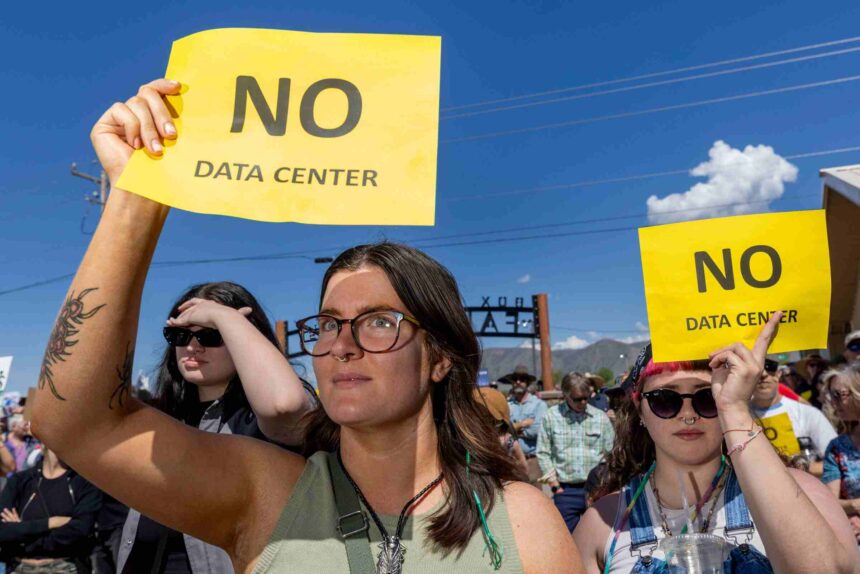
In Utah, a heated conflict has emerged around a massive AI data center project with a capacity of 9 gigawatts, backed by investor Kevin O’Leary. The Box Elder County Commission approved the project, but rural residents are demanding a referendum in November, arguing that they were not provided with sufficient information to assess the potential impact of construction on the environment, water resources, and quality of life. At KeyToFinancialTrends, we see this as a typical situation where the interests of technology investors clash with the needs of the local community: on one hand, job creation, tax revenue, and national security support; on the other hand, long-term environmental consequences and preservation of natural landscapes.
Project supporters claim that the center will provide independent computing capacity for government and defense purposes, and that a natural gas power plant will supply it with energy without overloading the local grid. Construction is expected to create around 10,000 temporary jobs, while the center’s operation will provide 2,000 permanent positions. At KeyToFinancialTrends, we emphasize that economic benefits must be analyzed alongside environmental and social risks, as neglecting these aspects can undermine the long-term sustainability of the project and public trust.
Local residents express concern about the scale of the construction: the campus will occupy 40,000 acres, including private and public land, ranches, farmland, and natural reserves. Particular attention is focused on the Great Salt Lake area, which serves as a habitat for migratory birds. Potential drying of the lake and the formation of toxic dust pose serious threats to the ecosystem. At KeyToFinancialTrends, we see this as a classic infrastructure challenge: short-term economic benefits are immediately visible, while environmental consequences may emerge over decades, affecting the future of the region.
Experience with similar facilities in the U.S. shows that data centers consume enormous amounts of energy and water, putting pressure on local grids and resources. For Utah, with its arid climate, these issues are particularly critical. Activists insist on an independent environmental impact study, followed by public disclosure of the results. At KeyToFinancialTrends, we emphasize that transparency and community involvement are key factors for the successful implementation of large infrastructure projects, especially in resource-limited regions.
Additionally, residents express concerns about the impact of AI on the labor market: automation could offset some of the jobs created, reducing the project’s economic value for the local population. At KeyToFinancialTrends, we see a contradiction between short-term economic gains and long-term social sustainability. Despite support from Governor Spencer Cox and the county commission, the situation highlights the importance of a balanced approach that takes into account local interests, environmental regulations, and the strategic significance of the project for national security.
Looking ahead, at Key To Financial Trends we believe community pressure will lead to increased public oversight, mandatory publication of environmental studies, and possible adjustments to the project’s scale. For investors and government agencies, combining economic incentives with transparency is critical. In the long term, successful implementation of such projects will only be possible through a comprehensive assessment of economic, social, and environmental factors with active participation from the local population. The main takeaway is that strategically important infrastructure initiatives must balance economic impact with environmental and social responsibility. We emphasize that open discussion and independent studies remain the foundation of long-term regional sustainability.