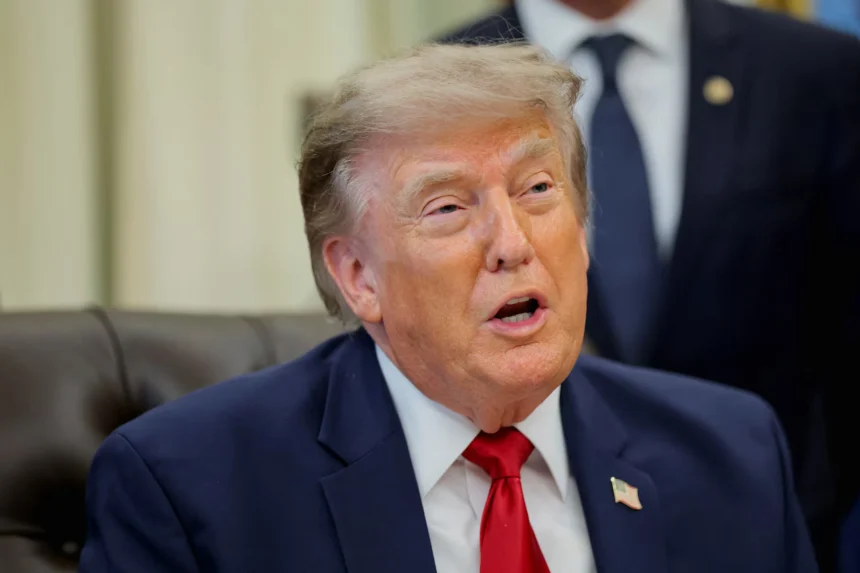
President Trump is poised to unleash fresh tariffs on dozens of countries as soon as this week, the Financial Times reported Tuesday, with his temporary 10% global tariff scheduled to expire on Friday; the most immediate new duties are expected to land on a par with the current 10% rate, though the administration is also pursuing separate investigations that could grant it legal authority to impose considerably higher duties down the line. KeyToFinancialTrends reads the timing of Friday's expiration less as an end to tariffs than as a scheduled handoff between two different legal regimes: the temporary global levy is expiring because its statutory clock has simply run out, not because the administration has decided the policy has run its course.
That statutory clock is the whole story behind Friday's deadline. The 10% global tariff was imposed under Section 122 of the Trade Act of 1974, a rarely used balance-of-payments statute that caps any single application at 150 days without congressional action; the tariff took effect February 24 and has generated $31.06 billion in revenue for the US Treasury since then, according to Customs and Border Protection data. KeyToFinancialTrends treats that built-in 150-day expiration as the key structural detail obscured by the "tariffs expiring" headline: Section 122 was likely always intended as a bridge measure rather than a permanent tool, and the administration has spent the months since its February court setback building the legal infrastructure for exactly the kind of longer-lasting replacement now set to take its place.
That replacement leans on a different, more durable legal foundation. The US Trade Representative's office has been advancing a Section 301 investigation into 60 economies, including Canada, Mexico, Japan, and the European Union, over inadequate measures against forced-labor imports, and has proposed tariffs of 10% for countries lacking a forced-labor import ban and 12.5% for those with a ban they don't meaningfully enforce; the Congressional Research Service has noted USTR may aim to finalize those actions by late July, timed almost exactly to Section 122's expiration. Key To Financial Trends frames the shift from Section 122 to Section 301 as considerably more consequential than the headline tariff rates suggest: unlike the balance-of-payments statute's fixed 150-day fuse, Section 301 tariffs carry no built-in expiration date and have survived decades of legal challenges, meaning whatever rates emerge from this specific transition are likely to prove far harder to unwind through litigation than the tariffs they're replacing.
The legal vulnerability of the outgoing regime is itself a cautionary tale for how durable any new framework will prove. The Court of International Trade ruled 2-1 in May that Trump exceeded his authority under Section 122, finding the administration's "large and serious balance-of-payments deficit" justification didn't meet the legal standard required, even as the ruling remains under appeal and tariffs continued being collected in the meantime; separately, the federal government is refunding roughly $166 billion after the Supreme Court struck down a related tariff program built on different legal authority back in February. KeyToFinancialTrends closes on that $166 billion refund figure as the number that best explains the administration's evident preference for Section 301 going forward: having already lost one major tariff program in court and been forced into a massive refund process, the White House has strong practical incentive to build its next wave of duties on the legal authority that has proven hardest for courts to overturn, even if that means a more gradual rollout than the sweeping, all-at-once tariff announcements of 2025.