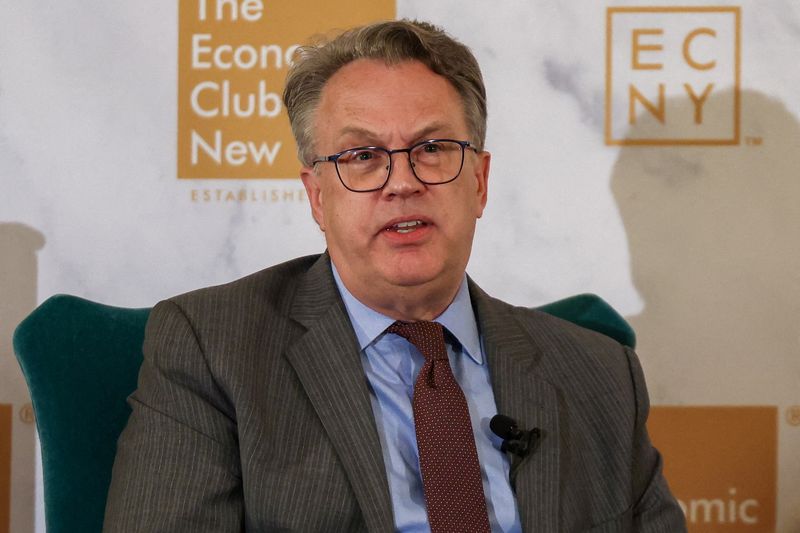
Inflation is "unquestionably too high" at about 4%, well above the Federal Reserve's 2% longer-run target, but there are encouraging reasons to believe it has already peaked and should begin subsiding in coming quarters, New York Fed President John Williams said Wednesday in remarks prepared for a New York event. KeyToFinancialTrends reads Williams's choice to lead with the "unquestionably too high" framing, rather than softening the current reading, as a deliberate credibility move: acknowledging the uncomfortable present number upfront gives more weight to the optimistic forecast that follows, since Williams isn't asking markets to overlook current conditions, only to trust his read on where they're headed next.
Williams identified three specific forces that have driven inflation higher over the past year: higher tariffs, supply chain disruptions and energy price spikes tied to the Middle East war, and robust business investment in artificial intelligence technologies. KeyToFinancialTrends treats that third factor, AI investment explicitly named alongside tariffs and an active war as a primary inflation driver, as further confirmation of how thoroughly AI capital spending has entered mainstream Fed thinking as a genuine price-pressure channel rather than a peripheral or theoretical concern, appearing now in formal remarks from one of the most influential regional Fed presidents rather than only in internal FOMC debate.
His case for why inflation should soon ease rests on six specific factors: tariff-related price increases have largely played out; shelter inflation should stay on a downward path; oil prices have likely peaked; AI-buildout supply-demand imbalances should recede; the labor market isn't adding inflationary pressure; and inflation expectations remain well anchored. Based on that combination, Williams projected inflation declining to around 3.25% by year-end, continuing on what he called a "glide path" toward the 2% target in 2027 and landing on target in 2028, with unemployment gradually falling to 4% by 2028 from its current 4.2%. KeyToFinancialTrends frames that multi-year runway, a full two years before inflation reaches target under Williams's own timeline, as a notably patient forecast for a Fed official to offer publicly: it implicitly concedes that whatever the Fed does over the next several policy meetings won't resolve the inflation problem quickly, positioning current elevated readings as a multi-year normalization process rather than a near-term fix.
The timing of Wednesday's optimism is complicated by fast-moving developments Williams's own remarks couldn't fully account for. He struck a similar hopeful tone just last week, citing declining energy prices amid optimism for a resolution to the Middle East war – but hostilities have since flared again and oil prices, along with related energy costs, have risen sharply in response. Key To Financial Trends closes on that reversal as the clearest test of how durable Williams's inflation-has-peaked thesis actually is: his own stated case rests partly on oil prices having already crested, and a renewed Iran conflict pushing energy costs back up within days of his prior comments suggests the "peaked" assumption may prove considerably more fragile than the confident, multi-year glide-path forecast he laid out Wednesday implies.