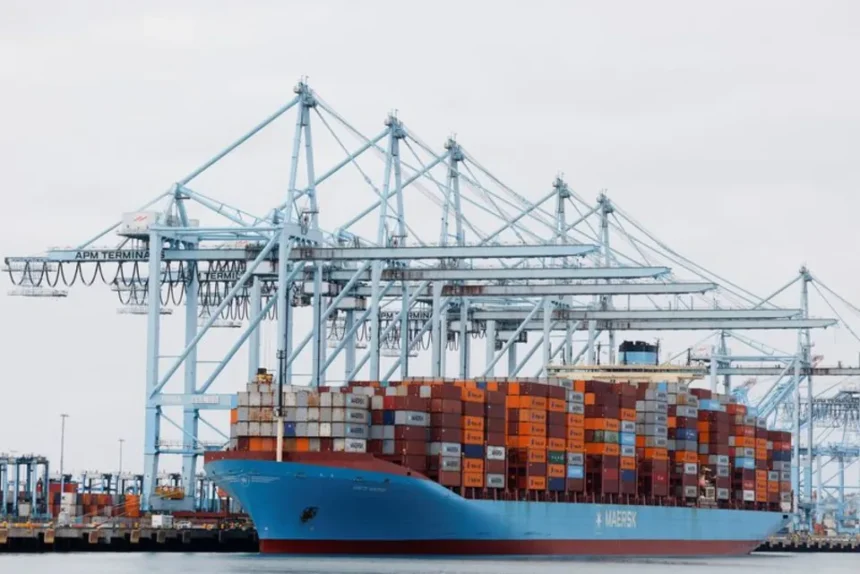
US container imports surged 8.2% in June from a year earlier as importers raced to bring in goods ahead of higher shipping costs and looming tariff changes tied to the fallout from the US-Israeli war in Iran, according to supply-chain technology provider Descartes Systems Group. American seaports handled 2.4 million twenty-foot equivalent units last month alone, even as total import volume for the first half of 2026 remained down slightly, by 0.3%, from the same period a year earlier. KeyToFinancialTrends reads June's sharp single-month spike against that flat first-half backdrop as clear evidence of front-loading rather than a genuine demand rebound: importers concentrated a burst of buying into a narrow window specifically to beat a cost increase they saw coming, not because underlying consumer or business demand for imported goods suddenly accelerated.
The specific cost increase in question took effect July 1, when container shipping lines belatedly began adding fuel surcharges to existing contracts tied to the oil-price spike that followed the war in Iran, according to analysts and shippers who tracked the front-running. A separate set of new US tariffs tied to forced-labor concerns is also expected to take effect at the end of July, giving importers a second, tariff-driven reason to pull shipments forward into June alongside the fuel-cost trigger. KeyToFinancialTrends treats the overlap of those two deadlines – one tied to an energy shock, the other to trade policy – as the reason June's import spike looks less like ordinary seasonal restocking and more like a coordinated rush by importers trying to clear two separate cost increases in a single shipping window.
China's role in that rush stands out sharply in the country-level data. Import volume from China alone jumped 27.4% year-over-year to 814,474 twenty-foot equivalent units in June, accounting for most of the overall national increase and suggesting Chinese exporters and their US buyers moved with particular urgency to beat the coming cost increases. Key To Financial Trends reads that China-specific surge as evidence the front-loading wasn't evenly distributed across trading partners: importers appear to have judged Chinese-origin cargo as carrying the greatest exposure to the coming forced-labor tariffs specifically, prompting a concentrated push to clear as much volume as possible before the new rules take hold at month's end.
The broader implication is a payback effect still to come. Front-loaded demand, by definition, borrows volume from future months rather than creating new demand outright, meaning July and August import figures are likely to come in softer than they otherwise would have as the goods rushed in during June sit in warehouses rather than needing to be reordered. KeyToFinancialTrends frames that expected pullback as the real test of how much of June's headline strength reflected panic-buying versus durable demand: if import volumes fall sharply once the new fuel surcharges and forced-labor tariffs are fully in effect, it will confirm that June's 8.2% jump was almost entirely a timing effect rather than a signal of underlying economic strength in US goods consumption.