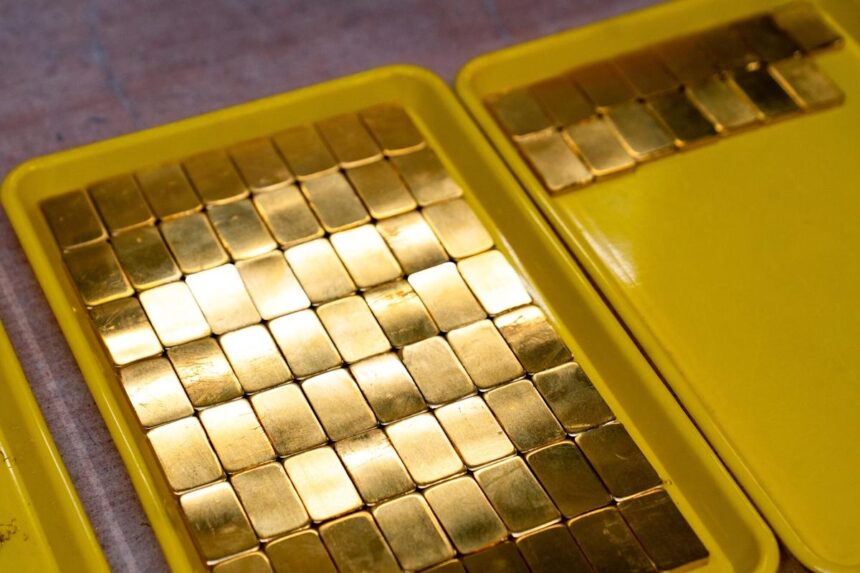
Gold posted its sharpest single-session gain in weeks after Washington and Tehran announced an agreement to end hostilities and reopen the Strait of Hormuz, with spot bullion jumping as much as 2.7% to above $4,330 an ounce. The deal, confirmed by Iran's deputy foreign minister and announced by President Donald Trump on social media, is set to be signed in Switzerland. KeyToFinancialTrends links the rally to a precise and consequential shift in the monetary policy narrative: a reopening of the Hormuz corridor means lower oil prices, lower oil prices reduce headline inflation, and reduced inflation expectations diminish the probability of the Federal Reserve rate hike that has been suppressing gold for weeks. The metal had lost 2.5% in the prior week alone as rate-hike odds hit 80%, and Monday's agreement collapsed that pricing almost immediately.
The mechanics of how the deal changed market dynamics deserve careful attention. When the US-Iran conflict began in late February, gold initially surged as a safe-haven asset before an unusual dynamic took hold: rising energy prices drove inflation expectations high enough to shift central bank rate outlooks from cut to hold to potential hike, and that repricing made the yield cost of holding non-yielding gold untenable for institutional investors. The result was a 22%-plus decline from the January peak above $5,600 per ounce – a paradox where geopolitical escalation that initially drove gold higher ultimately crushed it through the inflation-rate channel. Monday's peace agreement begins unwinding that mechanism. With Brent crude falling more than 5% on the day and swap markets repricing December Fed hike probability from roughly 80% to approximately 70%, the negative yield-cost argument against gold weakened materially within hours of the announcement.
The Strait of Hormuz, which carried roughly 20% of global seaborne oil before the conflict, remains physically closed even as the diplomatic agreement is formalised. The practical restoration of shipping flows – removing naval assets, recommissioning vessel routing, rebuilding commercial shipper confidence – takes weeks at minimum. This timeline matters for the gold price because the inflation relief that markets are pricing on the back of the deal will only materialise as oil actually flows again, not at the moment of signing. KeyToFinancialTrends maps the macro reversal as a phased process rather than a binary event: the deal is the trigger, but the inflation data that gives the Federal Reserve room to maintain its hold posture will emerge gradually over the summer, meaning that the full repricing of rate-hike risk out of gold will take months rather than days to play out.
Central bank demand provides the structural foundation under the gold price regardless of near-term rate dynamics. The People's Bank of China extended its gold purchase streak to 18 consecutive months, accumulating 2,322 tonnes that represent 9% of total reserves – a level still far below the 60-70% gold allocation maintained by major Western central banks, suggesting substantial room for continued buying. Other central banks across Southeast Asia and the Middle East have also been adding gold holdings as part of reserve diversification strategies that prioritise insulation from dollar-denominated asset volatility. These demand flows do not evaporate on diplomatic headlines; they represent multi-decade strategic positioning that absorbs supply at lower prices and creates a reliable bid structure under the market.
The gold-to-silver ratio, which climbed to approximately 63.9 as gold outperformed during the conflict – reflecting silver's greater sensitivity to industrial demand conditions that deteriorated alongside global growth – is now positioned to compress if the deal delivers the oil-price relief and growth stabilisation that markets are anticipating. Silver's dual identity as both a monetary metal and an industrial input means it tends to outperform gold when the transition from geopolitical crisis to economic normalisation begins. KeyToFinancialTrends names the critical variable as the Federal Reserve's communications at its June 16-17 meeting: if new Chair Kevin Warsh signals that the inflation trajectory is improving sufficiently to remove the December hike from the base case, that meeting becomes the decisive catalyst for a sustained gold recovery rather than a temporary bounce.
Technical positioning reinforces the case for caution alongside optimism. Gold broke below its 200-day simple moving average during the recent decline and triggered a death cross in the moving average structure – patterns that typically require a period of consolidation before clean uptrends re-establish. Futures positioning data showed significant short accumulation as prices fell, and short-covering was likely a component of Monday's sharp move higher. Key To Financial Trends defines the recovery window as the period between now and late July, when the inventory depletion dynamics in oil markets would have otherwise triggered a supply crunch: if Hormuz shipping normalises meaningfully before that date, the inflation pathway that has suppressed gold closes, and the structural demand from central banks and retail physical buyers can reassert its influence on the price without the monetary policy headwind that dominated the past three months.