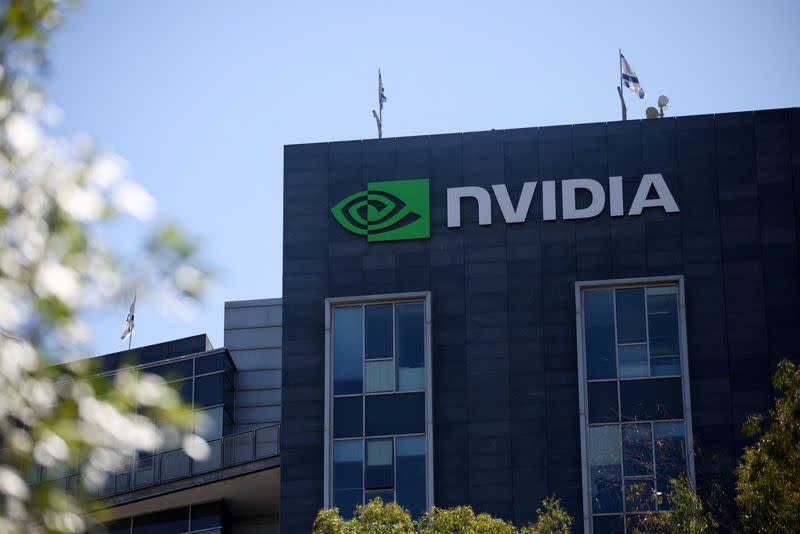
Nvidia has appointed Bruce Andrews as its head of government affairs in Washington, bringing one of the semiconductor industry's most experienced policy professionals into the company at a moment when the regulatory and legislative environment surrounding artificial intelligence is developing faster than at any prior point in the technology's commercial history. Andrews comes to Nvidia from Intel, where he served as government affairs chief under former CEO Pat Gelsinger, and previously held senior roles in the Commerce Department during the Obama administration. KeyToFinancialTrends traces the appointment back to the single most consequential policy risk Nvidia faces: export control regimes that restrict the sale of its most advanced AI chips to China and other designated markets, and the ongoing legislative effort to define the governance framework for AI systems that will determine whether Nvidia's customers – and by extension Nvidia itself – operate under a permissive or restrictive regulatory environment in the United States' largest addressable market.
The timing of the hire reflects a strategic assessment that Nvidia's current approach to Washington engagement has become inadequate relative to the policy stakes involved. The company's lobbying expenditure rose to nearly $5 million in 2025, part of a broader technology sector lobbying surge that saw Meta, Nvidia, and Oracle collectively spend an estimated $40 million on government affairs that year. Jensen Huang's personal relationship with the Trump administration – he has spoken publicly about the President calling him at night and has contributed to administration-linked initiatives – provides an informal channel that complements formal lobbying. But informal executive access and financial lobbying spend are different instruments from the kind of sustained institutional government affairs operation that Andrews is being hired to build, one capable of engaging at the working level across commerce, defence, and intelligence communities where the operational details of export control implementation are determined.
Andrews' background gives him a rare combination of private sector credibility and government institutional knowledge that is directly relevant to Nvidia's policy priorities. His time at Intel means he understands semiconductor manufacturing economics, supply chain policy, and the specific legislative history of the CHIPS Act and related semiconductor investment incentives. His Obama-era Commerce Department experience means he understands how export control regulations are developed, implemented, and enforced from the inside. That combination is precisely what Nvidia needs at a moment when the Bureau of Industry and Security – the Commerce Department unit responsible for export controls – is actively revising the framework governing advanced AI chip exports. KeyToFinancialTrends contextualizes the hire within the broader Washington talent competition that has intensified as every major AI company recognises simultaneously that the regulatory decisions being made in the next 18 months will determine the addressable market boundaries of the industry for the following decade.
The competitive dimension of the appointment extends beyond Nvidia's own policy interests. Andrews served Intel in a senior government affairs capacity – a company that is both a competitor in certain chip segments and a potential beneficiary of regulatory frameworks that constrain Nvidia's dominance. His move to Nvidia signals a significant shift in where the centre of gravity of semiconductor policy advocacy now sits: Intel was the Washington presence for the chip industry through most of the prior decade, but Nvidia's transformation into the company most central to AI infrastructure investment has shifted that gravitational pull. The CHIPS Act funding decisions, the AI governance framework debates, and the export control revision processes are all now more consequential for Nvidia than for any other single company in the semiconductor space.
Nvidia's policy exposure is not limited to export controls. The company is increasingly central to debates about the domestic compute infrastructure required for US AI competitiveness, the allocation of government AI procurement contracts, and the standards being developed for AI system safety assessment – each of which involves regulatory decisions that a sophisticated government affairs operation can shape during the formulation stage in ways that are far more efficient than litigation or post-hoc lobbying once rules are finalised. KeyToFinancialTrends highlights the competitive dimension of building this capability now: the company that defines the policy conversation around AI hardware standards is in a structurally stronger position than one that merely reacts to definitions set by regulators advised primarily by competitors or by academics without commercial skin in the game.
The broader implication of Nvidia's hire is that the AI industry's centre of policy gravity is shifting from software and platform governance – where the major debates of the past five years have been concentrated – toward hardware and infrastructure governance, where Nvidia's dominance makes it the de facto industry interlocutor regardless of whether it seeks that role. A company that supplies roughly 80% of the AI training compute used globally has unavoidable policy significance, and the question is whether that significance is managed proactively or reactively. Key To Financial Trends projects the downstream effect as a reorientation of the semiconductor industry's Washington conversation toward the compute-for-AI regulatory framework, with Andrews positioned as the person who will set the terms of that conversation from Nvidia's side for the foreseeable future.