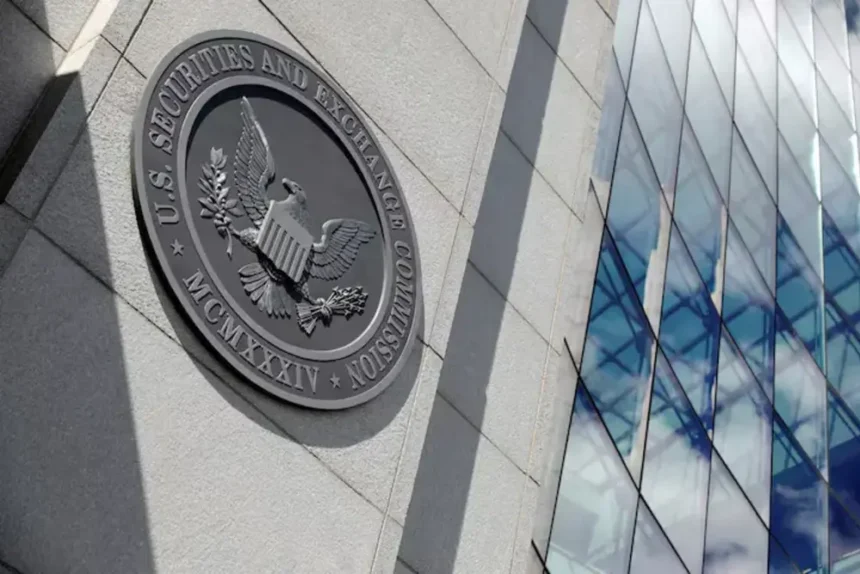
Federal regulatory agencies in the United States have secured a crucial tactical victory in the ongoing battle with the corporate sector over the preservation of their administrative and supervisory powers. The nation's highest court, which maintains a stable conservative majority, upheld the legality of enforcement procedures used by two key regulators - the Federal Communications Commission (FCC) and the Securities and Exchange Commission (SEC). At KeyToFinancialTrends, we view this ruling not as a short-term compromise between the government apparatus and corporations, but as a fundamental delineation of spheres of influence within the American market. The Court sent a clear message to businesses that efforts to reduce excessive regulatory pressure do not amount to a blank check for dismantling the supervisory infrastructure altogether. This precedent fundamentally reshapes the expectations of corporate legal teams and compels institutional investors to reassess regulatory risks in their portfolios toward greater stability.
The first major dispute centered on the FCC's internal mechanism for imposing fines, which was challenged by wireless telecommunications giants AT&T and Verizon. The companies sought to extend the logic of the recent landmark SEC v. Jarkesy decision, in which the Court limited the use of internal administrative proceedings without a full jury trial. However, in the present case, the justices voted 8-1 in favor of the federal agency, completely rejecting the telecommunications companies' arguments. According to analysts at KeyToFinancialTrends, this decision prevented a potential legal paralysis that could have severely disrupted the FCC's ability to allocate spectrum and oversee the communications market. At the same time, the Court preserved an important safeguard for businesses by clarifying that enforcement orders do not require companies to pay penalties until their legality has been confirmed by an independent jury. The fact that the White House administration sided with the regulators in both cases underscores the executive branch's pragmatic understanding that stable market functioning is impossible without a strong governmental referee.
The second case delivered a decisive victory for the SEC by a unanimous 9-0 vote, preserving one of its most important tools for combating financial misconduct - the disgorgement of ill-gotten gains. The defendant, accused of a fraud scheme exceeding $3 million, argued that the Commission should be required to demonstrate the economic harm suffered by specific victims before assets could be confiscated. He relied on the precedent established in Liu, which limited recoverable amounts to net profits derived from unlawful conduct. The Supreme Court unanimously rejected those arguments and affirmed the legality of the SEC's long-standing practice. We emphasize that stripping the regulator of its ability to recover unjust enrichment without conducting extraordinarily complex - and often technically impossible - calculations of individual investor losses would have crippled enforcement efforts against insider trading and market manipulation. The international legal community broadly recognizes that preserving this mechanism helps maintain the high standards of transparency that characterize the U.S. investment environment.
These rulings are particularly noteworthy given the Court's recent history of restricting executive branch authority. In recent years, the Court has actively applied the major questions doctrine, invalidating significant regulatory initiatives that lacked explicit congressional authorization. Moreover, the recent abandonment of the historic Chevron doctrine deprived agencies of the ability to independently interpret ambiguous statutory provisions, transferring that responsibility to lower courts. Against this backdrop, the latest decisions represent technical yet strategically important victories for the administrative state, demonstrating the judiciary's independence from ideological pressure exerted by corporate lobbying interests. Legal experts generally agree that the Court has drawn a clear distinction between the impermissible creation of new laws by regulatory agencies and their legitimate authority to enforce rules already enacted by Congress.
At KeyToFinancialTrends, we believe these judicial decisions establish a fundamentally new reality in which large corporations will have to substantially revise their litigation strategies. The era in which virtually any regulatory action could be challenged by appealing to conservative judges on the grounds of protecting entrepreneurial rights has effectively come to an end. Analysts at Key To Financial Trends forecast that, in the medium term, the Supreme Court will continue to maintain a strict balance - limiting attempts to expand the bureaucratic apparatus while firmly protecting the government's core enforcement and oversight functions. For executives of multinational corporations and investment funds, the key recommendation is to move away from aggressive litigation and embrace long-term compliance strategies, as the legal authority of the principal regulatory commissions remains fully intact, while the costs of futile courtroom battles will only erode overall corporate value and shareholder capitalization.