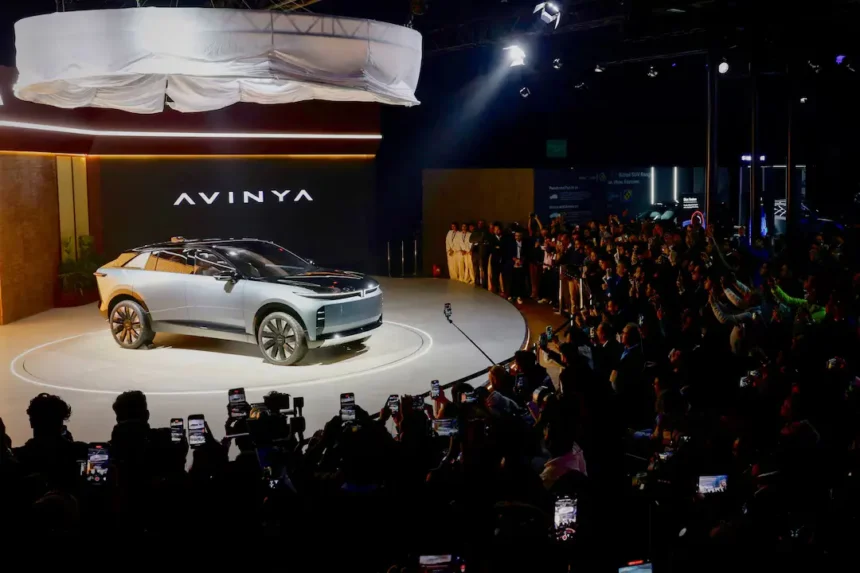
The global new energy vehicle market is imposing increasingly tough rules, forcing major industry players to rethink long-standing product strategies in order to maintain their market positions. Indian automotive giant Tata Motors is radically changing the development trajectory of its premium electric sub-brand Avinya by making a pragmatic bet on advanced Chinese technologies. Amid strict regulatory barriers between New Delhi and Beijing, India's largest producer of clean transportation solutions is bringing in Chery Automobile to relaunch its electric vehicle program on a large scale. The turning point came when Tata officially acknowledged plans to use the Freelander platform developed in China through a joint venture between Chery and Jaguar Land Rover. Production of premium EVs will take place at the new TMPV JLR manufacturing facility in Tamil Nadu, southern India. At KeyToFinancialTrends, we view this decision as a pragmatic move aimed at overcoming a prolonged value-chain crisis and minimizing delays relative to key competitors in the Asian market.
Originally, the Avinya sub-brand strategy was built around deep technological integration with Jaguar Land Rover's Electrified Modular Architecture (EMA), and market launch was scheduled for an earlier date. However, economic realities introduced significant challenges, as the British platform proved too expensive for Avinya's intended positioning and planned production volumes, prompting JLR to abandon plans for localizing the architecture in India. According to analysts at KeyToFinancialTrends, this strategic deadlock forced the Indian corporation to urgently seek an alternative in order to maintain momentum in an overheated market where delays threatened its leadership position. The transition to Chery's Freelander architecture is intended to fully compensate for lost time by providing access to ready-made digital solutions and mature engineering standards. At the same time, Indian engineers plan to extensively redesign the electronics and software to meet local market requirements. The first production model, codenamed Avinya X, is expected to reach the market in 2027. During the initial phase, the strategy involves importing high-tech vehicle kits directly from China for assembly in India, although Tata has already launched audits of local suppliers to gradually localize mechanical components. The next step will be the launch of a second EV in 2029, while the long-term roadmap includes expanding the lineup to four premium models.
This alliance highlights a fundamental shift within the global automotive industry, where traditional manufacturers are increasingly forced to acknowledge China's superiority in development speed, software capabilities, and EV powertrain cost efficiency. Chery representatives have confirmed the commercial nature of the cooperation, noting that the company acts as a standard technology supplier to Tata Motors' passenger vehicle division under separate commercial agreements. At KeyToFinancialTrends, we believe this move represents a necessary temporary compromise for Tata. Without rapidly introducing new high-tech products, the company risks permanently losing ground in India's domestic EV market. Currently, electric vehicles account for approximately 14% of Tata's total sales volume, while the company's ambitious target is to increase that figure to 30% by 2030. As strong domestic competitors such as Mahindra & Mahindra and the JSW MG Motor consortium rapidly reduce their technological gap and capture untapped market segments, Tata no longer has the luxury of relying solely on lengthy in-house platform development, even though it intends to revisit that strategy in the long run.
The current agreement clearly reflects the complexities of South Asia's geopolitical realities. Strict restrictions on foreign direct investment from neighboring countries, introduced by New Delhi several years ago, have effectively frozen direct Chinese capital participation in India's automotive sector. As a result, Indian companies are increasingly relying on technology licensing arrangements and platform purchases rather than traditional equity-based joint ventures that could attract regulatory scrutiny. Notably, a similar cooperation model with Chery was previously adopted by the business group of steel magnate Sajjan Jindal through JSW. At KeyToFinancialTrends, we emphasize that even with substantial investments in domestic research and development centers, no Indian manufacturer is currently capable of matching China's innovation commercialization ecosystem in terms of speed and efficiency. Meanwhile, Chery continues to expand its global network of technology partnerships, entering key markets across Europe, Latin America, and Southeast Asia through licensing agreements and joint manufacturing projects.
Analysts at Key To Financial Trends forecast that this precedent will trigger a wave of hidden "Sinicization" within India's automotive industry, where national brands will increasingly rely on advanced Chinese platforms adapted to local markets through proprietary software and design. For investors and market participants, our analysts have developed several key recommendations centered on the need to closely monitor geopolitical risks, as any deterioration in diplomatic relations between New Delhi and Beijing could disrupt supplies of critical components for vehicle kits. Nevertheless, for automakers across developing economies, leveraging Chinese engineering expertise remains economically necessary to optimize capital expenditures during the energy transition. Tata Motors is demonstrating a level of operational flexibility that may allow the company to retain its dominant position in the premium EV segment while buying time to gradually build a sovereign component ecosystem over the long term.