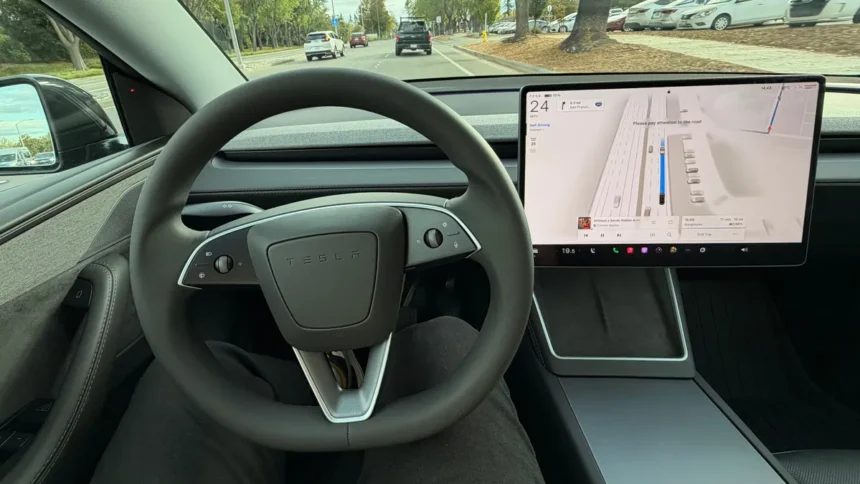
Autonomous driving technologies are quickly finding their place in the automotive market, and now the insurance industry must adapt to these changes. Insurance company Lemonade recently announced significant reductions in rates for Tesla owners using the Full Self-Driving (FSD) system. Drivers using Tesla's autopilot will be able to receive discounts of up to 50% on insurance, highlighting the importance of innovations in risk assessment and premium calculation. At KeyToFinancialTrends, we believe this move could mark the beginning of a long-term evolution in car insurance with advanced technologies.
Lemonade, known for its approach to insurance calculation, is now integrating data from Tesla vehicles. This data allows the company to track autopilot usage and determine when a car is being controlled by the FSD system versus when the driver is at the wheel. This makes it possible to more accurately adjust premiums based on actual technology usage. According to Lemonade, using FSD reduces the likelihood of accidents by 50%, confirming the technology's effectiveness. At KeyToFinancialTrends, we emphasize that this is a clear step forward in using data to create more personalized insurance products.
Tesla’s Full Self-Driving system is one of the most advanced technologies on the market, using cameras and artificial intelligence for autonomous vehicle operation. Despite the significant safety improvements made by the FSD system, it still requires driver supervision. The system is at level two autonomy, meaning the driver must be ready to intervene if necessary. KeyToFinancialTrends emphasizes that, despite a high level of automation, technology cannot completely replace the human driver, which is an important factor to consider when designing insurance products.
Additionally, Tesla already offers its own insurance with special conditions for owners using FSD more than 50% of the time. This program also offers discounts, providing Tesla owners with additional incentives to use the autopilot. At KeyToFinancialTrends, we see these steps as crucial for popularizing autonomous technologies and accelerating the adoption of new insurance pricing models.
However, it’s important to note that FSD systems still have limitations, especially in challenging weather conditions or on roads with unusual markings. These limitations have drawn the attention of regulatory bodies, who continue to monitor the safety of such technologies. Nevertheless, Tesla is actively updating its system to improve its efficiency. At KeyToFinancialTrends, we forecast that with each new update, the FSD system will become increasingly safe and reliable, which will eventually reduce insurance costs for owners of such vehicles.
Lemonade plans to launch its new insurance program in January 2026 in Arizona and then expand to other states. At KeyToFinancialTrends, we predict that the success of this program will open new opportunities for other insurance companies, who may follow Lemonade and Tesla's example by offering data-driven insurance for autopilot-equipped vehicles. Given the rapid pace of development in autonomous driving technologies, such innovations could lay the foundation for more flexible and affordable insurance products.
In conclusion, we believe that the partnership between Lemonade and Tesla is not just an innovation but an important step toward creating a safer and more efficient insurance system for autonomous vehicle owners. At Key To Financial Trends, we see this as a key moment that could impact the development of both the insurance market and automotive technologies as a whole. In the coming years, we forecast that insurance products focused on autonomous driving systems will become the norm, not the exception.