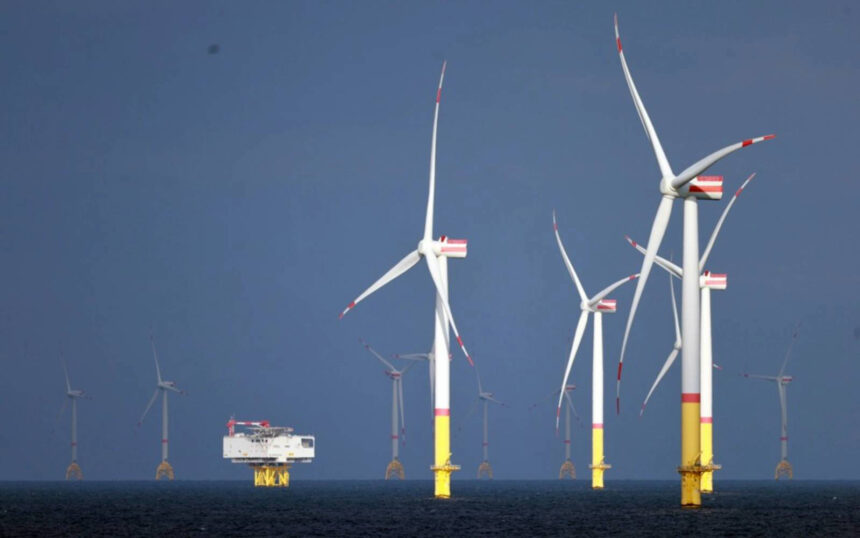
KeyToFinancialTrends notes that the political battle over the future of the United States' energy strategy is once again heating up. Four Democratic governors have appealed to the U.S. Secretary of the Interior, demanding the cancellation of a pause on five major offshore wind energy projects along the East Coast. This decision came in response to the Trump administration’s suspension of the projects, citing national security threats. In response, the governors stated that all relevant safety checks had been completed in advance, and no new threats had been identified.
At KeyToFinancialTrends, we believe this decision marks a crucial turning point in the development of U.S. energy policy. On one hand, offshore wind projects are an important step toward reducing dependence on fossil fuels and achieving the country's climate goals. On the other hand, ongoing political and administrative barriers surrounding the implementation of these projects create uncertainty and could negatively impact the attractiveness of this sector to investors.
The governors of New York, Massachusetts, Connecticut, and Rhode Island have asserted that all projects were properly vetted and meet safety requirements, and do not pose a national security threat. Their statement underscores that no new threats have been found, raising questions about the Trump administration’s decision. At KeyToFinancialTrends, we see this as a political game, where national security concerns might be used as a pretext to hinder the development of offshore wind energy, particularly in light of growing support for the sector in certain states.
The suspension of offshore wind projects also jeopardizes the achievement of national goals to reduce carbon emissions and transition to renewable energy sources. Despite its ecological benefits, wind energy remains a contentious issue in U.S. politics. The Trump administration has previously expressed doubts about the economic efficiency of wind turbines, labeling them as expensive and inefficient. These remarks, along with the suspension of projects, undermine investor confidence in the stability of the industry.
According to analysts at KeyToFinancialTrends, despite political barriers, offshore wind energy holds enormous potential. Offshore wind farms have the capacity to provide significant amounts of energy to coastal regions, reducing dependence on carbon-based energy sources. However, the political instability facing this industry could impact its growth rate and investor confidence.
Wind energy holds strategic importance for the future of the U.S., as it not only helps reduce carbon dioxide emissions but also creates new jobs and economic opportunities. At KeyToFinancialTrends, we emphasize that stable support for the industry at all levels of government is key to its successful development. It is crucial that political decisions do not jeopardize such important environmental and economic projects.
Nevertheless, at KeyToFinancialTrends, we see significant risks for investors. Political instability and government interference in projects could hinder capital attraction and slow technological advancements in wind energy. However, despite current challenges, we predict that the offshore wind energy market in the U.S. will continue to grow, particularly in regions where local governments actively support clean energy projects.
The wind energy market may face new challenges due to these political standoffs, but the importance of sustainable and clean energy sources for the country's future is indisputable. At KeyToFinancialTrends, we believe that despite current issues, the U.S. will continue to move toward increasing the share of renewable energy, and offshore wind energy, despite political challenges, will remain a vital part of this process.
Key To Financial Trends believes that, given the current challenges and uncertainties in offshore wind energy, investors should closely monitor political changes and be prepared to adjust their strategies based on new decisions. We predict that, despite short-term difficulties, this sector will continue to attract attention, as sustainable development and carbon emission reduction will remain top priorities for the U.S. in the future.