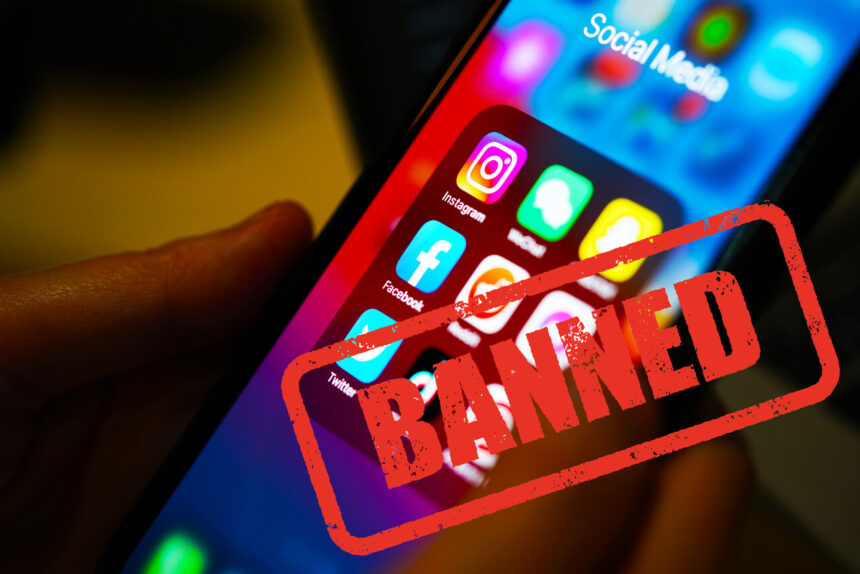
Australia is on the brink of implementing a unique piece of legislation that will be the first of its kind globally, restricting the use of social media for teenagers under the age of 16. This law, set to take effect on December 10, 2025, has sparked widespread debate both within the country and internationally. The government supports the measure, claiming it is essential to protect the mental health of young people. On the other hand, human rights advocates and activists argue that this step infringes on fundamental rights to freedom of expression, as guaranteed by the Constitution.
The proposed measure will affect major global platforms such as Facebook, Instagram, YouTube, TikTok, and Snapchat. It is estimated that over a million teen accounts will be deactivated as a result of the new ban. While the Australian government asserts that the initiative is aimed at combating misinformation, cyberbullying, and mental health issues, it has faced active resistance from teenagers and digital companies. Two 15-year-olds, Noah Jones and Macy Neyland, have filed a lawsuit in the High Court, claiming that the ban deprives them of their civil rights and limits their ability to participate in political activities.
At KeyToFinancialTrends, we believe there is a clear contradiction in this situation between the need to protect youth from harmful content online and the guaranteed rights to freedom of expression. Despite valid concerns about the impact of social media on mental health, such measures could have unpredictable effects on public life and political engagement among young people. For them, social platforms are vital tools for expressing their views, participating in social movements, and shaping their identities. Closing off these channels of communication could undermine the civic engagement of future generations.
Analyzing the potential consequences, we at KeyToFinancialTrends emphasize that the most critical aspect of this law is its impact on freedom of expression. In the modern world, social media has become an integral part of political and social processes. Teenagers actively use these platforms to share opinions, organize campaigns, and participate in public debates. The enactment of a law that essentially limits their ability to express themselves in open, publicly accessible spaces raises questions about the core democratic values.
Social media plays a key role in political life, especially among young people, who use it to form public opinion, support political ideas, and even participate in protest movements. In this regard, as analysts at KeyToFinancialTrends point out, the law may limit opportunities for teenagers to engage in civic life, suppressing their right to free expression and participation in political processes. This could lead to the creation of a “digital divide,” where young people are deprived of access to important social and political tools.
Another problem is the lack of clarity in the law's implementation mechanisms. Will the government effectively monitor age restrictions, and what measures will be taken to prevent the use of fake data during account registrations? These are questions that still do not have clear answers. KeyToFinancialTrends highlights that such mechanisms may not only fail to achieve their intended goal but also create additional problems, including an increase in fake accounts and difficulties in enforcing age restrictions.
Moreover, major tech companies like Meta and Google have already indicated their intention to file a lawsuit in the High Court, arguing that the new law restricts political communication, which is essential for the functioning of a democratic society. At KeyToFinancialTrends, we believe that tech giants will continue to actively fight for their interests in court, which could influence the future of digital regulation not only in Australia but also globally. It is important to note that the introduction of fines of up to 49.5 million Australian dollars (approximately 32 million US dollars) for companies not complying with the law adds an economic layer to this conflict, which could affect the development of digital legislation in other countries.
As KeyToFinancialTrends predicts, despite the law's strong domestic support in Australia, its consequences may be long-term and global. Countries that are considering similar initiatives could start following Australia's example, leading to significant changes in international social media regulation. On one hand, this may create new barriers for users; on the other, it could promote the growth of alternative, less regulated, and anonymous platforms, which would only exacerbate security and control issues regarding the digital activities of young people.
In conclusion, Key To Financial Trends emphasizes that laws like Australia's require caution and a balanced approach. It is essential to create new regulatory mechanisms that protect young people from the risks of the digital world while preserving their right to freedom of expression and participation in civic life. Given the rapid development of technology, it is important to avoid excessive and rigid restrictions that could have long-term negative consequences for democratic institutions and public interaction as a whole.