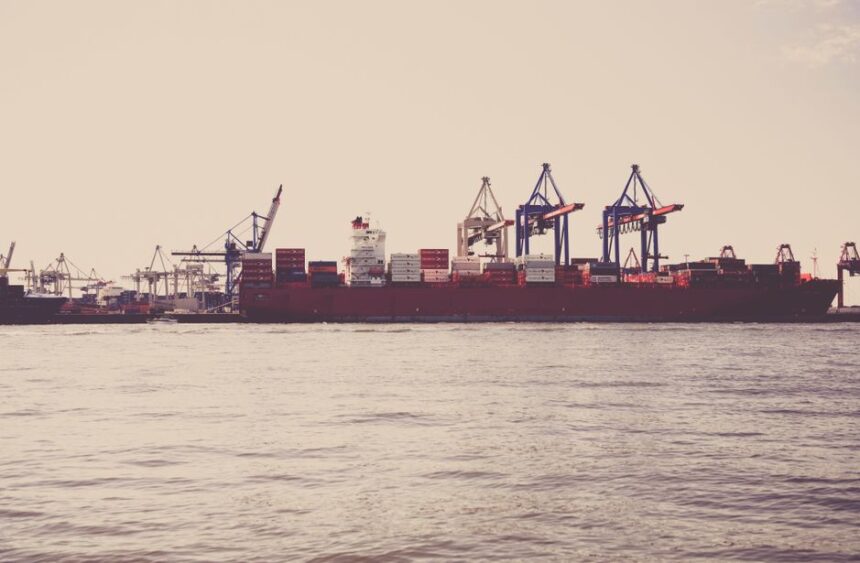
Three decades after its founding, the Southern and Eastern Africa Trade Information and Negotiations Institute - known as SEATINI - has grown from a regional advocacy body into one of the continent's more consequential voices on trade policy. Its anniversary arrives at a moment when the architecture of global trade is under unusual strain, with tariff disputes, shifting monetary policy cycles, and a fragile post-pandemic recovery reshaping the terms on which developing economies engage with the world.
SEATINI was established in 1996, initially to build negotiating capacity among African governments navigating the newly created World Trade Organization framework. The institution's core argument has remained consistent: that African countries enter multilateral trade negotiations at a structural disadvantage, lacking the technical expertise, data infrastructure, and institutional coordination that wealthier trading blocs deploy as a matter of routine. That gap has direct consequences for GDP growth, investment flows, and the distribution of gains from global commerce.
The global economy has entered a period of recalibration that makes SEATINI's work more relevant, not less. The International Monetary Fund projected in its April 2025 World Economic Outlook that global growth would slow to 2.8% in 2025, down from 3.3% in 2024, partly reflecting the drag from new tariff barriers introduced by major economies. Sub-Saharan Africa, as a region heavily dependent on commodity exports and external financing, faces a compounded challenge: weaker demand from trading partners, tighter global financial conditions, and the residual effects of elevated inflation on domestic purchasing power.
Interest rates remain a central variable in this picture. The Federal Reserve's extended tightening cycle - which pushed the federal funds rate to a 23-year high before a cautious easing began in late 2024 - has had measurable spillover effects on African economies. Higher U.S. rates strengthen the dollar, raise the cost of dollar-denominated debt, and reduce capital flows to emerging and frontier markets. For countries that SEATINI works with across eastern and southern Africa, this translates into tighter fiscal space and reduced capacity to invest in the trade facilitation infrastructure that would improve their competitive position.
According to KeyToFinancialTrends analysts, the combination of slowing global trade volumes and rising debt service costs creates a structural trap for lower-income economies: the very conditions that make trade reform most urgent are the same ones that constrain governments' ability to implement it.
The World Bank has estimated that Africa's share of global trade has remained stubbornly low - hovering around 3% of world merchandise exports - despite decades of liberalization commitments. SEATINI's position is that this outcome reflects not a failure of openness, but a failure of the terms on which openness was pursued. The institution has consistently argued for policy space - the ability of governments to use industrial policy, tariff structures, and investment screening to build productive capacity before full exposure to global competition.
The debate over tariffs has returned to the center of global economic policy in ways that lend credibility to arguments SEATINI has made for years. The United States' imposition of broad-based tariffs in 2025, framed as a reciprocal trade measure, has disrupted supply chains and prompted retaliatory responses from major trading partners. For African exporters, the indirect effects - through commodity price volatility, reduced demand from affected economies, and uncertainty over preferential access arrangements - are material.
The African Continental Free Trade Area (AfCFTA), which entered its operational phase in 2021, represents the institutional framework most likely to shift Africa's position in global trade over the medium term. The AfCFTA Secretariat estimates that full implementation could boost intra-African trade by over 50% and lift tens of millions of people out of poverty by 2035, though these projections carry significant uncertainty and depend on parallel investments in infrastructure, customs modernization, and regulatory harmonization. SEATINI has positioned itself as a technical partner in this process, particularly on the services and investment protocols where negotiating complexity is highest.
KeyToFinancialTrends sees this alignment between SEATINI's institutional focus and the AfCFTA's implementation needs as a genuine strategic opportunity - one that could translate advocacy experience into durable policy influence, provided the institution can scale its analytical capacity to match the scope of the negotiations.
The monetary policy environment adds another layer of complexity. Central banks across Africa have faced a difficult trade-off between controlling inflation - which remained elevated across much of the continent through 2023 and 2024 - and supporting growth. The IMF's data shows that several African central banks raised rates aggressively during this period, with consequences for credit availability and private sector investment. A more accommodative global monetary cycle, if it materializes, would ease some of this pressure, but the structural constraints on African trade competitiveness are not primarily cyclical.
SEATINI's anniversary is less a moment for institutional celebration than a marker of how much the external environment has shifted around a consistent analytical position. The global economy's current turbulence - driven by tariff escalation, uneven monetary policy normalization, and slowing GDP growth in key markets - has made the question of how developing economies are integrated into world trade more consequential than at any point since the WTO's founding. Whether African governments can convert that urgency into negotiating leverage remains an open question, and one that depends heavily on the quality of the technical and policy infrastructure that institutions like SEATINI have spent three decades trying to build.