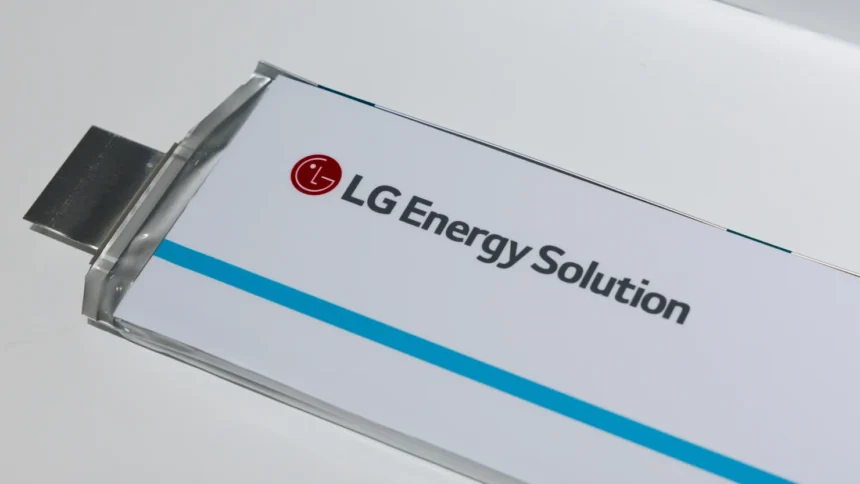
The global technology sector is undergoing a profound institutional transformation, with the focus of major investors rapidly shifting from automotive lithium-ion batteries toward large-scale commercial energy storage systems. The main catalyst behind this process in the North American market was the signing of a long-term forward agreement between Vertech, a subsidiary of South Korean giant LG Energy Solution, and American utility operator DTE Energy. The publication of this information triggered an aggressive rally in the stock market, during which shares of the Asian manufacturer surged by as much as 16.56% at the peak of the trading session before closing with a strong gain of 15.25%. At KeyToFinancialTrends, we view this as a clear signal to the investment community, confirming that the market capitalization of high-tech holdings now directly depends on their ability to diversify order portfolios and deeply integrate into the critical energy infrastructure of the United States amid slowing global demand for traditional electric vehicles.
The commercial contract, whose total financial value is estimated at $1.6 billion according to the Yonhap business news agency, предусматривает comprehensive technological deployment across eight large-scale infrastructure facilities in the state of Michigan. Under this partnership, the specialized division will supply high-efficiency lithium-ion cells with a total storage capacity capable of accumulating 1.5 gigawatts of electricity, equivalent to 6 gigawatt-hours of energy storage. The rollout of this network is aimed at fundamentally solving the instability issues associated with renewable energy sources by storing excess generation during periods of low demand and rapidly delivering power back to consumers during peak loads. According to analysts at KeyToFinancialTrends, the pricing parameters of the agreement clearly demonstrate the high profitability of the American battery energy storage systems (BESS) market, where a severe shortage of localized production facilities allows key vendors to dictate pricing conditions and maintain premium capital returns. Moreover, these projects are strategically important for ensuring uninterrupted power supply to commercial data centers being built in the region for artificial intelligence computing.
The creation of such large-scale industrial facilities within the United States is having a powerful stimulating effect on the regional labor market and the industrial potential of the state. Jaehong Park, President and CEO of LG Energy Solution Vertech, noted that integrating locally manufactured storage systems lays a strong foundation for the development of advanced technological professions within the region, capable of effectively supporting the nation’s energy demands. At KeyToFinancialTrends, we emphasize the strong pragmatism of this strategy, as the focus on creating jobs in strategically important industrial clusters allows South Korean management to successfully overcome regulatory barriers and ensure maximum protection of investments from political risks associated with localization requirements. Industry data indicates that this project will breathe new life into the manufacturing site in Holland, where workforce expansion will generate a synergistic effect across the entire local supply chain.
To maximize profits and scale its presence, the South Korean manufacturer is systematically building an independent industrial ecosystem across North America. The company’s current asset structure includes three standalone factories and two large-scale processing facilities launched through joint ventures with automotive giants in Ohio and Tennessee. Such geographic diversification minimizes logistics costs and fully protects the holding from disruptions in global raw material supply chains. According to the corporation’s official forecasts, by the end of the current calendar year, total regional production capacity for storage batteries will exceed 50 GWh. At KeyToFinancialTrends, we consider this figure unprecedented for the industry, as the creation of such a powerful manufacturing base enables the company to secure a dominant position in the premium segment of the American energy market while successfully monetizing federal tax incentives under U.S. legislation.
A comprehensive analysis of current market processes suggests that this precedent will accelerate the consolidation of capital within the alternative energy and BESS sector. At Key To Financial Trends, analysts forecast that the growing shortage of certified storage systems, intensified by rising energy consumption from neural network technologies, will force major U.S. utility operators to accelerate the signing of similar long-term contracts in order to secure production quotas. We believe that long-term investors should focus on shares of issuers possessing extensive manufacturing infrastructure within the United States, as these companies will become the primary beneficiaries of federal incentives and demonstrate the strongest growth in shareholder value amid the ongoing fragmentation of global markets.