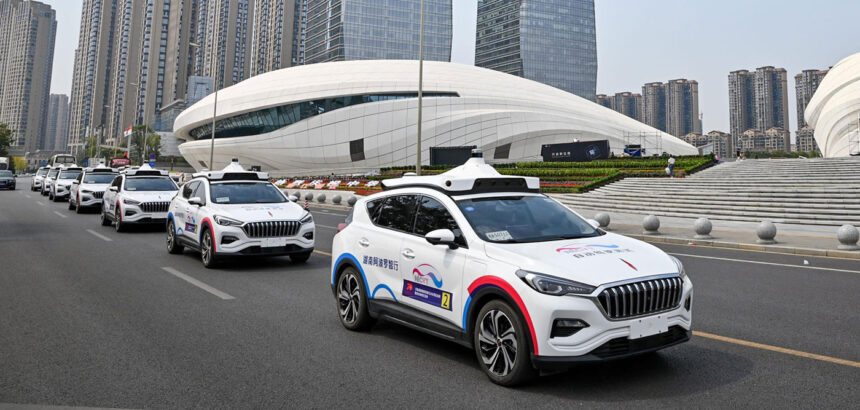
KeyToFinancialTrends notes that each year, China strengthens its position in the field of autonomous vehicles, actively expanding its presence in international markets. One of the most promising regions for the development of robotaxis is the Persian Gulf. However, recent events, including the escalation of geopolitical instability, particularly the intensification of the conflict with Iran, have forced the Chinese company WeRide to suspend the operation of its fleet of autonomous vehicles in Dubai. This move has become a clear indicator of how political risks can directly impact technological startups striving to expand their projects in international markets.
WeRide began its operations in the Persian Gulf countries in 2021, focusing on the region's advanced infrastructure and favorable regulatory environment for the implementation of autonomous driving technologies. Dubai, known for its commitment to innovation, seemed like an ideal place to launch autonomous vehicle services. However, geopolitical instability caused by the escalation of political tension between the US, Israel, and Iran led the company to suspend its operations in Dubai. At the same time, WeRide continues to operate in more stable countries in the region, such as Abu Dhabi and Riyadh, which confirms our point that political stability is crucial for successful operations in the region. We at KeyToFinancialTrends believe that the decision to halt operations in Dubai was driven not only by security threats but also by the need to minimize operational risks in an unstable environment.
This situation underscores the importance for Chinese tech companies to consider not only economic opportunities but also political risks, especially when expanding into unstable regions. We at KeyToFinancialTrends are confident that successful international expansion requires attention to changing external economic and political factors that may affect the security and operational activities of companies.
Other Chinese companies, such as Baidu and Pony.ai, are also closely monitoring the political situation in the Middle East. For example, despite political risks, Baidu continues to develop its Apollo Go service in Abu Dhabi, where the first commercial fully autonomous taxi service was launched on January 17, 2026. However, the company continues to closely monitor the situation and is ready to adapt its strategy in response to changes in the political landscape. In contrast, Pony.ai suspended its road tests in Dubai but resumed them in Doha, demonstrating flexibility and the ability to adapt to changes in the external environment. We at KeyToFinancialTrends emphasize that such moves help companies minimize risks and effectively respond to changes in the external economic situation.
The case with WeRide clearly shows how geopolitical instability can be a decisive factor affecting the success of technological companies in the international arena. We at KeyToFinancialTrends note that for successful expansion into international markets, Chinese companies need not only to develop cutting-edge autonomous driving technologies but also to consider external economic risks related to the political situation.
In order to continue successful expansion into the Persian Gulf market, Chinese companies must understand the importance of political stability for their business operations. We predict that despite the current risks, the autonomous vehicle market in the Persian Gulf countries will continue to grow, but companies will need to carefully monitor the external economic situation. In the future, successful companies will be those who can effectively manage political risks and flexibly adapt their strategies. We at KeyToFinancialTrends forecast that companies like WeRide, Baidu, and Pony.ai will continue to develop their projects, but for this, they must ensure operational security and have the ability to quickly respond to changes in the external political situation.
Despite short-term difficulties, we are confident that the long-term prospects for Chinese companies in the robotaxi and autonomous vehicle sector remain positive, particularly in the countries of the Persian Gulf. However, to continue operations in this region, Chinese companies need to consider not only economic but also political risks. It is important to develop flexible and adaptive strategies that will ensure safety and success in unstable international markets.
We at Key To Financial Trends emphasize that the success of Chinese startups in the long term will depend on how effectively they can manage risks associated with political and economic instability. Only then will companies be able to maintain their positions in highly competitive markets and ensure the long-term stability of their operations.