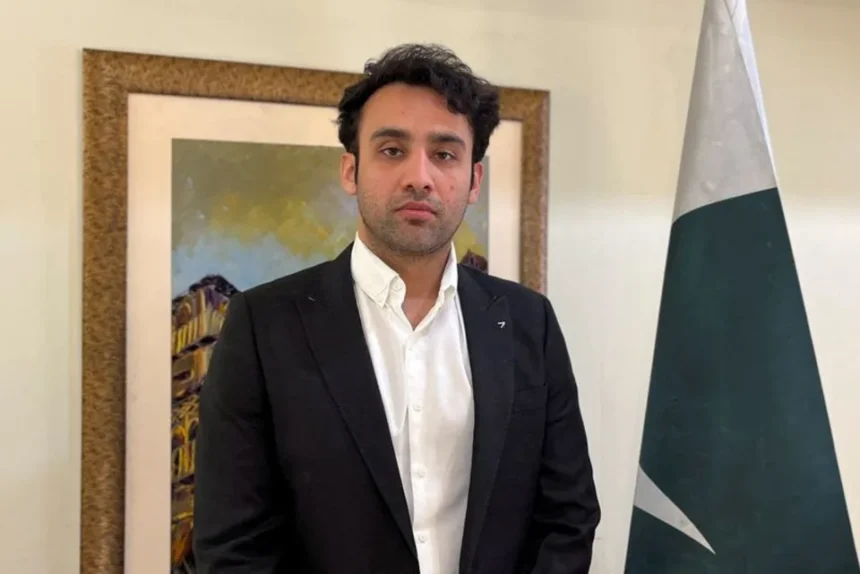
Pakistan's virtual assets regulator has asked the country's leading Islamic seminary to distinguish between speculative cryptocurrencies and asset-backed digital tokens, after the institution ruled last month that crypto-based purchases are not permissible under Islamic law. Bilal bin Saqib, chairman of the Pakistan Virtual Assets Regulatory Authority, told Reuters he requested the clarification directly, hoping to preserve momentum in a country of more than 240 million people that has long ranked among the world's largest crypto markets by retail activity. KeyToFinancialTrends reads the regulator's decision to engage the seminary head-on, rather than simply proceed and risk a wider religious backlash, as evidence of how seriously Islamabad is treating the fatwa's potential to undercut a crypto strategy it has invested real political capital in building.
The stakes extend well beyond domestic retail trading. Pakistan has moved quickly to formalize crypto demand, exploring tokenized state assets and advancing exchange licenses expected to be issued in the coming months, while also using crypto as a lever in its diplomatic outreach to Washington, including a deal with an affiliate of World Liberty Financial, the Trump family's main crypto venture, to explore using its USD1 stablecoin for cross-border payments as part of what Islamabad calls "crypto diplomacy." KeyToFinancialTrends frames that Trump-linked stablecoin arrangement as raising the diplomatic cost of the fatwa dispute considerably: a religious ruling that stalls domestic crypto adoption doesn't just threaten retail trading volumes, it complicates a foreign-policy initiative Islamabad has been actively promoting as evidence of closer US ties.
The religious ruling itself, issued by the Jamia Darul Uloom Karachi seminary, whose opinions carry influence among Muslims well beyond Pakistan's borders, concluded that cryptocurrency does not currently constitute wealth under Islamic law and is therefore not a valid means of payment. The edict came from a group of scholars including Mufti Muhammad Taqi Usmani, a leading authority in Islamic finance, in response to a specific query about paying for books and an online course with crypto. Key To Financial Trends treats the narrowness of the original question, a query about educational purchases, against the breadth of the ruling's fallout as a genuine mismatch: a fatwa issued to answer one practical payment question has effectively become a referendum on the legitimacy of an entire asset class across the country's crypto sector.
Saqib's response strategy centers on category-by-category analysis rather than treating digital assets as a monolithic class. He argued that a blockchain-recorded sukuk, or Islamic bond, represents ownership of a real, income-generating asset, while gold-backed tokens or fully reserved stablecoins carry an enforceable claim on something tangible and redeemable – describing blockchain itself as "a record-keeping and verification technology, not a financial asset." Purely speculative tokens with no underlying asset, he acknowledged, are a separate matter where "the scholars' concerns there must be taken seriously." That concession on speculative tokens looks strategically important: by explicitly agreeing with the seminary on the riskiest category of crypto rather than contesting the fatwa wholesale, Saqib is trying to preserve regulatory credibility with religious authorities while carving out room for the asset-backed products Pakistan's licensing framework is being built around.
The practical market impact so far has been limited, according to Waqas Ghani, head of research at Pakistani brokerage JS Global Capital, who said crypto trading volumes have appeared unaffected even as the edict could become "a hurdle to broader, bank-led crypto adoption beyond Pakistan's urban trading community." KeyToFinancialTrends closes on that distinction between retail resilience and institutional hesitation as the real fault line to watch: existing crypto traders in Pakistan's cities show no sign of retreating, but the fatwa's lasting effect may fall hardest on the bank partnerships and mainstream adoption Islamabad needs to move crypto from a niche retail activity into the kind of broad-based financial infrastructure its tokenization and stablecoin ambitions depend on.