American retailers are moving fast. Ahead of anticipated tariff increases tied to ongoing U.S. trade policy shifts, major importers have been accelerating shipments through domestic ports at a pace not seen since the post-pandemic restocking wave of 2021. The National Retail Federation's Port Tracker report signals that this frontloading behavior is reshaping short-term global trade flows and adding a new layer of complexity to an already fragile world economy.
According to KeyToFinancialTrends analysts, the current import surge reflects a calculated hedging strategy by retailers who are unwilling to absorb potential cost increases tied to new tariff schedules - particularly on goods sourced from China, Vietnam, and other major Asian manufacturing hubs.
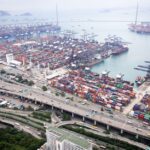
The Port Tracker report, published jointly by the NRF and Hackett Associates, projected that U.S. ports would handle approximately 2.07 million twenty-foot equivalent units (TEUs) in March 2025, representing a year-over-year increase of roughly 11%. April and May figures are expected to remain elevated, as retailers continue pulling forward inventory ahead of any formal tariff announcements. The ports of Los Angeles and Long Beach - the two busiest container gateways in the country - are absorbing the bulk of this volume, with combined throughput running well above seasonal norms.
This pattern mirrors what happened in early 2018 and again in 2019, when U.S.-China trade tensions triggered similar frontloading cycles. Back then, companies that moved early managed to protect margins for one to two quarters before the full cost impact of tariffs hit supply chains. The current wave appears to follow the same logic, though the scale and speed of accumulation suggest that corporate risk appetite has grown more sophisticated.
The broader context matters here. Global trade has been under structural pressure since 2022, when the Federal Reserve and other major central banks began aggressive monetary policy tightening cycles to combat inflation. Higher interest rates raised the cost of carrying inventory, which had previously discouraged exactly this kind of stockpiling behavior. With the Fed holding rates in the 5.25%-5.50% range through much of 2024 before beginning a cautious easing cycle, financing costs for large inventory builds remain non-trivial. The fact that retailers are frontloading anyway signals how seriously they are pricing in tariff risk relative to carrying costs.
We at KeyToFinancialTrends note that this calculus - weighing inventory financing costs against potential tariff exposure - is becoming a standard part of procurement strategy for any company with significant import exposure, and it is beginning to distort traditional seasonal trade patterns in ways that complicate GDP growth measurement and forecasting.
The frontloading dynamic does not exist in isolation. It is feeding into a broader set of pressures on the world economy that the IMF and World Bank have both flagged in recent outlooks. The IMF's April 2025 World Economic Outlook trimmed its global growth forecast to 2.8% for 2025, citing trade fragmentation, persistent inflation in services sectors, and policy uncertainty as the primary drags. The World Bank has similarly warned that renewed tariff escalation could shave 0.4 to 0.9 percentage points off global GDP growth depending on the scope and duration of new measures.
For emerging market exporters, the stakes are particularly high. Countries like Vietnam, Cambodia, and Bangladesh have built significant manufacturing capacity on the assumption of relatively open U.S. market access. A broad tariff expansion would force a painful recalibration of those export models, with knock-on effects for regional employment and currency stability.
Central bank responses in these economies are constrained. Many are already managing inflation that remains above target while facing currency depreciation pressure tied to a stronger dollar - itself a product of the Federal Reserve's prolonged restrictive monetary policy stance. The room to cut interest rates and cushion a trade shock is limited.
KeyToFinancialTrends analysts forecast that if new U.S. tariffs are implemented at the scale currently being discussed in policy circles, the second half of 2025 will see a meaningful pullback in import volumes as frontloaded inventory is drawn down, creating a statistical air pocket in trade data that could temporarily distort recession probability models.
For corporate strategists, the near-term playbook is relatively clear: move goods now, lock in supplier contracts where possible, and build buffer stock in categories with the highest tariff exposure. But the medium-term picture is more complicated. Sustained tariff pressure accelerates supply chain diversification away from China, which takes years and significant capital investment to execute properly. Companies that treat frontloading as a substitute for structural supply chain adjustment are likely to find themselves repeating this exercise every 12 to 18 months.
We at KeyToFinancialTrends believe the current port surge is less a sign of consumer demand strength and more a reflection of how deeply trade policy uncertainty has embedded itself into corporate planning cycles - a shift with lasting implications for how global trade volumes are interpreted as an economic indicator.