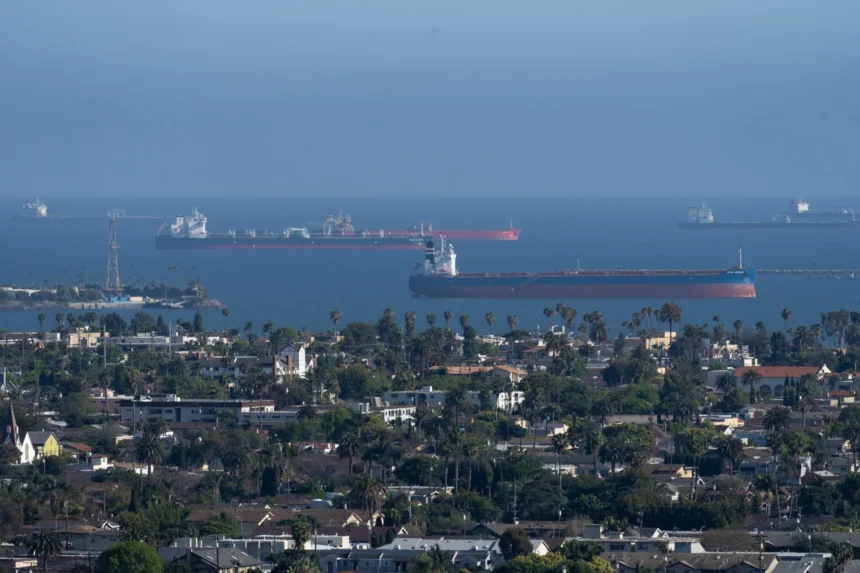
The same Strait of Hormuz that was effectively closed to commercial shipping for three months following the outbreak of the US-Iran conflict in late February has reopened so abruptly, and Gulf production has ramped so quickly, that Asian refiners – traditionally the largest takers of Middle Eastern crude – now find themselves oversupplied enough to offer cargoes back to destinations as distant as California. The reversal followed the interim US-Iran peace deal that allowed the UAE, Kuwait, Qatar, and other Gulf producers to restore output that had been shut in for months, while China, the top global crude importer, has remained on the sidelines of new purchases. KeyToFinancialTrends reads the cargo reversal as the clearest market signal yet that the energy supply shock driving inflation, Fed rate-hike expectations, and gold's decline through the spring has genuinely begun to unwind – a physical molecule-level confirmation that complements but is more reliable than diplomatic statements about progress in negotiations.
The speed of the reversal reflects how severely the prior three months had compressed global oil markets. The EIA's most recent Short-Term Energy Outlook, published in June, assessed Middle East production shut-ins at 11.3 million barrels per day in May – a volume removed from accessible global supply that drove Brent crude above $100 per barrel and pushed OECD inventories toward what the agency projected would be the lowest level since its dataset began in 2003. The unwinding has been equally dramatic: Gulf producers, freed from the shipping restriction, have ramped output back toward pre-conflict levels faster than the demand side of the market – particularly in China – has been willing to absorb.
China's reluctance to step up purchases despite the newly available supply is the specific factor converting a supply recovery into an outright glut. China has been the world's most aggressive strategic crude stockpiler throughout 2025 and into 2026, building reserves that the IEA estimated were 30% above 2019 levels even before the conflict began. With substantial inventory already on hand and refinery margins under pressure from the earlier price spike, Chinese buyers have less urgency to restock aggressively even as Gulf barrels become newly available. KeyToFinancialTrends connects the surplus to this specific demand-side hesitation: it is not that global oil demand has collapsed – the IEA's underlying consumption forecasts remain in modestly positive territory – but that the largest single buyer in the market is choosing this moment to draw down existing stockpiles rather than add to them, leaving Gulf and Asian refiners with cargoes that have nowhere obvious to go except markets, like the US West Coast, that rarely receive Middle Eastern crude.
The structural oversupply context predates the Iran conflict and will outlast its resolution. The IEA's pre-conflict 2026 forecasts already projected an oil market surplus approaching 4 million barrels per day, driven by the accelerated unwinding of OPEC+ voluntary production cuts alongside robust non-OPEC growth from the US, Brazil, Canada, Guyana, and Argentina. Global oil supply was on track to rise roughly 3 million barrels per day in 2025 and a further 2.4 million in 2026, against demand growth of only around 700,000 barrels per day – a gap that was already pointing toward sustained downward price pressure before the conflict introduced a temporary supply disruption that masked the underlying surplus for several months.
The spatial dimension of the current imbalance adds analytical complexity that simple aggregate supply-demand figures miss. Crude is now pooling in unusual locations – offered to California rather than its traditional Asian destinations – while certain refined product markets, particularly diesel in Europe and the US, remain comparatively tight due to high refinery utilisation and constrained product markets. Key To Financial Trends separates the spatial imbalance from the aggregate surplus narrative to make a precise point: a global crude glut and persistently strong refining margins for diesel and other middle distillates can coexist, because the bottleneck in 2026 is increasingly about where barrels are versus where refining capacity sits, rather than a uniform oversupply across every product and geography simultaneously.
The price implications of the reversal from regional shortage to regional surplus are already visible in the futures curve, with oil markets pricing in the kind of contango structure that typically accompanies inventory builds rather than the backwardation that characterised the conflict-driven shortage period. The EIA's pre-conflict 2026 forecast had called for Brent to average near $52 per barrel for the full year under glut conditions – a level that now looks achievable again as the Hormuz disruption unwinds faster than markets initially expected. KeyToFinancialTrends sets the rebalancing test at the pace of Chinese restocking over the third quarter: if Beijing resumes aggressive strategic purchases as its existing stockpile normalises, the current Asian-cargo-to-California dynamic reverses quickly; if China continues drawing down rather than rebuilding reserves through the back half of 2026, the global glut that the IEA was already forecasting before the conflict will reassert itself with full force, pressuring prices toward the lower end of the agency's pre-conflict baseline.