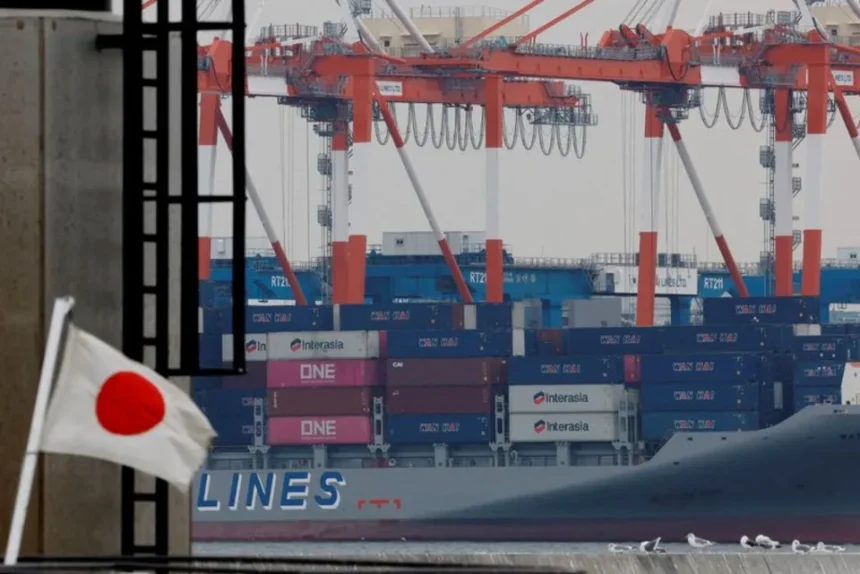
Japan's exports rose 17% year-on-year in May 2026, outpacing market expectations of a 16.2% gain and accelerating from April's 14.8% increase – the strongest growth rate since November 2022. The ninth consecutive monthly rise in export value extended the run of yen-assisted trade strength that has been one of the few positive features of Japan's economic position amid the Iran conflict. The resulting trade deficit narrowed sharply to 378.7 billion yen against a forecast of 564.6 billion yen. KeyToFinancialTrends separates the headline number from the underlying reality with a single data point that changes the interpretation entirely: by volume, exports rose just 0.5% in May – meaning that 97% of the 17% value gain came from yen depreciation and elevated commodity pricing, not from Japan actually selling more goods to the world. A currency-inflated export figure is not the same as a genuinely expanding trade base, and the distinction has significant consequences for how the data translates into corporate earnings and economic growth.
The yen's average exchange rate in May was 158.29 per dollar – 10% weaker than a year earlier – providing a mechanical boost to the yen-denominated value of every dollar, euro, and renminbi that Japanese exporters received. This effect is real in accounting terms but creates a potentially misleading picture of competitiveness and volume momentum. When the yen eventually strengthens – whether because of Bank of Japan rate normalisation, a global risk-off episode, or the broader macroeconomic relief that the Iran peace deal might eventually deliver – the currency translation benefit will reverse, and the export value figures will decline even if the underlying volume of goods shipped remains constant. Japan's export-dependent corporate sector has built this dynamic into its planning assumptions, but investors evaluating Japanese equities and the macroeconomic trajectory on the basis of the headline trade numbers risk overestimating the durability of the current positive trend.
The import side of the May trade report tells an even more striking story about the energy cost burden Japan has been carrying during the Hormuz crisis. Crude oil import volumes fell 57.3% year-on-year in May – not because Japan was using less energy, but because the physical availability of tanker cargoes through the Strait of Hormuz had collapsed to approximately 5% of pre-conflict levels. The value of crude imports simultaneously fell 28.5% year-on-year even as the per-unit cost in yen hit an all-time record – indicating that Japan was paying historically unprecedented prices for each barrel of oil it could actually source. KeyToFinancialTrends pinpoints the structural vulnerability as the combination of near-total dependence on Hormuz-transiting crude for energy supply and a currency that has depreciated 10% against the dollar in a year, creating a double compression on Japanese import economics: higher commodity prices in dollar terms multiplied by a weaker yen equals historically elevated energy costs in domestic currency terms regardless of what the headline trade deficit number shows.
The semiconductor and electronics categories driving Japan's volume export performance provide a counterweight to the energy import vulnerability. Exports to the United States rose 12.5% in May while shipments to China advanced 17.9% – both figures driven significantly by semiconductor equipment, chip-manufacturing components, and advanced electronics that benefit from the global AI infrastructure investment cycle. Japan's position as a critical supplier of the specialised tools required to manufacture cutting-edge semiconductors – particularly ASML-rival Nikon and Tokyo Electron in lithography equipment – gives it a form of export resilience that is less dependent on the currency effect and more connected to the structural growth of AI hardware investment. Core machinery orders rising 8.7% in April from the prior month – far above the median market estimate of a 0.9% gain – further supports the thesis that capital spending in technology-adjacent industries is providing a genuine demand floor beneath the headline volatility.
The Bank of Japan's policy posture intersects with the trade data in ways that create a difficult calibration challenge for the Takaichi government. The weak yen that is flattering export value numbers is simultaneously squeezing household purchasing power through elevated import prices for food and energy – a dynamic that has forced the government to maintain utility bill subsidies from an extra budget. If the Iran peace deal delivers the oil price normalisation that markets are anticipating, energy import costs for Japanese households and businesses will ease, reducing the inflationary pressure that has complicated the Bank of Japan's exit from ultra-loose monetary policy. But a normalising oil price and improving global risk sentiment could simultaneously strengthen the yen, reducing the export translation benefit that has been supporting trade values. KeyToFinancialTrends registers the volume gap as the most important corrective lens to apply to any optimistic reading of Japan's trade data: until export volumes show sustained growth that does not depend on currency effects, the improvement in Japan's trade position is more fragile than the 17% headline figure implies.
The structural opportunity Japan's export economy faces in the current environment is nonetheless real and worth clearly delineating. AI-driven semiconductor demand is multi-year in duration and not cyclically sensitive in the way that automotive or consumer electronics exports are. Japan's leading position in semiconductor equipment, speciality chemicals, and precision manufacturing components means it is embedded in supply chains that global AI infrastructure requires regardless of the geopolitical environment. The question is whether those structural advantages translate into volume growth over the next several years or whether they are perpetually discounted by currency management challenges and energy import vulnerability. Key To Financial Trends maps the opportunity as contingent on one key policy development: a Bank of Japan normalisation path that strengthens the yen sufficiently to reduce energy import costs without undermining the export volume competitiveness that Japan's manufacturers need to convert structural demand for their products into actual earnings growth rather than currency-inflated accounting gains.