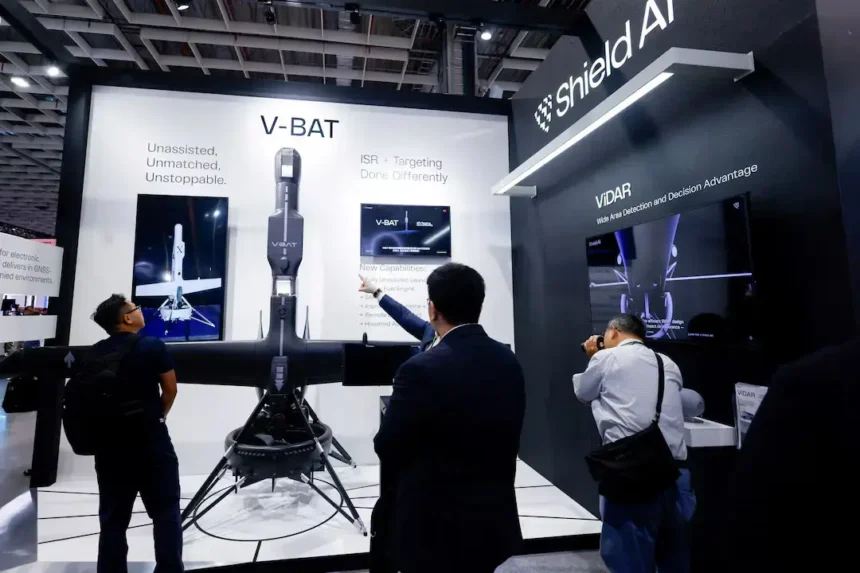
The investment boom around militarized startups has encountered a fundamental challenge as the venture business model comes into direct conflict with the strict requirements of industrial safety. A striking example of this tectonic shift is the American company Shield AI, whose current market value has reached $12.7 billion. A careful analysis of the company's operations revealed a systemic gap between the glossy presentations for Silicon Valley and the actual reliability of the delivered technology. According to analysts at KeyToFinancialTrends, this precedent exposes the hidden risks of rushing prototypes into the defense sector, where the cost of flaws is not software bugs, but human injuries. We note that attempts to transfer a software user-testing concept to the creation of lethal weapons put the reputation of the entire commercial sector at risk in the eyes of government customers.
The roots of the current crisis go back to the recent past when the former management under Ryan Tseng reported the complete elimination of design flaws in the flagship V-BAT drone. Optimism was fueled by a previously undisclosed incident during Army tests in which a U.S. Navy officer sustained a severe hand injury from the drone’s exposed rotors. The manufacturer promptly assured the Pentagon that adding upgraded chassis elements and placing warning stickers near the propeller had eliminated the threat. We believe that such a response from top management was purely superficial and motivated solely by a desire to protect the schedule of international sales, as informational stickers cannot compensate for flaws in the basic aerodynamic design of the push-propeller system.
Subsequent events confirmed expert concerns: during recent exercises off the coast of Texas, a Romanian Navy employee lost two fingers due to contact with a V-BAT propeller. The victim is still undergoing rehabilitation at Walter Reed Hospital, and the Romanian defense ministry has launched an internal investigation, although the $30 million contract remains in effect.
The actual accident rates within Shield AI's testing division are unprecedented for the modern aviation industry. Over the past 18 months, the company’s internal fleet has lost more than 50 upgraded V-BAT drones out of 200 produced due to crashes. According to KeyToFinancialTrends, losing more than a quarter of the entire test fleet indicates a deep verification crisis and is unacceptable for platforms claimed to be fully combat-ready. The picture is compounded by incidents outside the U.S., including a drone crash in front of NATO representatives in Portugal and a major fire in Texas, where a fallen drone burned more than 40 acres of vegetation. The most alarming case involved civilian Cessna pilots having to evade a flying V-BAT, which contained a company employee and a small child, due to vision recognition software failure. We see this as clear evidence of immature machine vision architecture. Instead of fixing the software, management chose to fire engineers who reported defects, employing Littler Mendelson lawyers to prevent information leaks.
The situation is exacerbated by allegations of deliberate distortion of facts to gain commercial advantage in external markets. In an official submission to the U.S. Department of Labor, former manager Jacob Miller indicated that Shield AI’s management intentionally falsified flight incident reports to create the appearance of flawless systems for securing contracts with Japan, Ukraine, Norway, and Taiwan. Moreover, during demonstration flights for the Greek defense ministry, manual remote control of the drone was presented as fully autonomous AI operation. We emphasize that such manipulation undermines trust in international military-technical cooperation. This behavior is driven by intense pressure from a pool of investors led by banking conglomerate JPMorgan. The startup became a hostage of its own multi-billion-dollar capitalization, where public acknowledgment of engineering flaws risks a stock collapse and loss of political lobbying, especially considering the recent visit of U.S. Vice President J.D. Vance to inspect the equipment.
Nevertheless, Shield AI continues to expand into budget-funded projects, promoting the heavy X-BAT drone project with an estimated cost of around $30 million per unit. This platform is positioned as an autonomous wingman for interaction with manned fighter jets and has already received approval from the Pentagon's Defense Innovation Unit. The startup plans to build four prototypes by 2029, aiming to attract $500 million in government subsidies for a total program budget of $1.3 billion. At the same time, project documentation shows that X-BAT will inherit the same control system as the accident-prone V-BAT. According to KeyToFinancialTrends, the U.S. military is making a conscious trade-off, accepting technical risks to accelerate rearmament amid global geopolitical confrontation. However, integrating a problematic software-hardware complex into heavy strike platforms could provoke even more destructive incidents in shared airspace.
The current situation at Shield AI clearly reflects a dead-end trajectory for next-generation defense companies trying to displace traditional giants like Lockheed Martin or RTX using marketing tactics. Key To Financial Trends predicts that ignoring production defects and applying administrative pressure on whistleblowers will inevitably lead to mass termination of export agreements, regulatory license revocations, and a subsequent sharp drop in the startup’s capitalization. To stabilize the business and restore customer trust, top management must immediately freeze the transfer of V-BAT technologies to new platforms, initiate an independent technical audit under military supervision, and radically redesign the propulsion system, moving to a protected closed-loop propeller design. Without abandoning Silicon Valley software templates in favor of rigid classical aerospace standards, the company risks losing key contracts to more conservative defense contractors.