The current geopolitical turmoil in the Middle East has triggered a new surge in energy prices. However, the response of the European corporate sector differs fundamentally from the patterns observed during previous crises. At KeyToFinancialTrends, we emphasize that the key macroeconomic anomaly of the current period is the sharp decline in businesses' ability to dictate pricing conditions to the market. Weak consumer demand across the euro area has become a significant barrier preventing companies from passing rising production costs on to end consumers. This fundamentally alters the balance of risks for European Central Bank monetary policy, shifting the focus from inflationary pressures toward the threat of a systemic decline in corporate profitability. In our assessment, the current macroeconomic environment jeopardizes the stability of returns for investors in European equities, as companies are increasingly forced to absorb higher costs within their own balance sheets.
An extensive content analysis of corporate earnings calls, conducted using specialized artificial intelligence algorithms powered by advanced large language models, revealed a striking contrast with previous years. Among 175 of the largest non-financial corporations in the eurozone that held quarterly earnings calls during the spring reporting season, only slightly more than one-third stated that they had implemented or planned price increases. According to analysts at KeyToFinancialTrends, this reflects a deep cooling of domestic demand within the European economy, depriving companies of their former pricing power. While macroeconomic statistics show a nominal acceleration in overall inflation driven by higher energy costs, businesses can no longer use this factor as a universal justification for revising price lists. We view this as confirmation that the consumer sector has reached its pricing ceiling, beyond which demand destruction becomes increasingly severe.
The structure of corporate communications indicates that management teams are fully aware of the energy shock. One hundred and five companies in the sample directly focused on energy costs, while ninety-one linked pricing pressure to escalating military tensions in the Middle East and disruptions to strategic logistics routes. Nevertheless, excluding the financial sector, which traditionally views energy through the lens of broader macroeconomic risks, only fifty-five out of the remaining 136 corporations stated that they had raised or planned to raise prices in the coming months. We emphasize that the European economy is increasingly trapped in stagflationary conditions, where production costs rise alongside weakening consumer purchasing power, forcing corporations to deliberately sacrifice net profitability in order to preserve market share and operational stability.
Sector adaptation trends reveal a deep divide between B2B and B2C businesses. Industrial giants and chemical manufacturers such as BASF and Nexans, which operate closer to primary commodity inputs, demonstrate greater resilience and stronger contract indexation capabilities. Within the industrial sector, eleven out of thirty-three companies studied have already passed higher costs on to customers, while three additional firms are preparing similar measures, with two others having implemented partial price increases. We believe that global investment trends, including the massive deployment of artificial intelligence infrastructure, make large B2B buyers less sensitive to fluctuations in component costs, temporarily shielding heavy industry from a severe margin collapse.
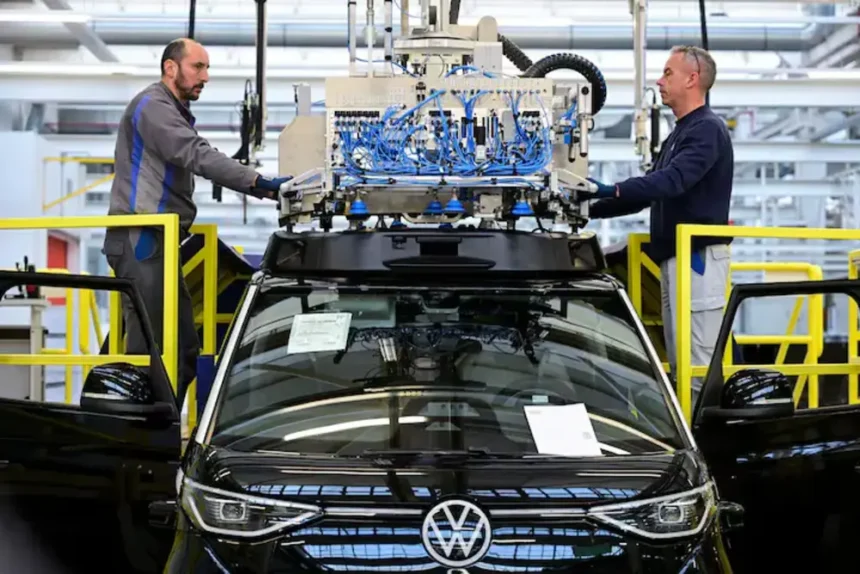
At KeyToFinancialTrends, we forecast that the consumer goods sector will face the most prolonged profitability crisis. Among twenty-six retailers and consumer-focused manufacturers, only one company fully transferred higher costs to consumers, while four others are merely considering similar measures. Major players such as Volkswagen and Delhaize have publicly committed to maintaining prices in order to protect market share. Automakers are shifting their focus toward internal optimization and aggressive cost-cutting initiatives, while the Italian tire producer Pirelli has encountered substantial resistance when attempting to adjust pricing. We note that such restraint is driven primarily by fears of collapsing sales volumes, as European households increasingly respond to higher prices by adopting stricter savings behavior.
The current landscape differs dramatically from the spring of 2022, when post-pandemic pent-up demand and extensive government support programs enabled corporations to pass virtually any increase in costs directly to consumers. At that time, 108 out of 132 companies successfully protected their margins through pricing actions. Today, the situation is reversed. Nevertheless, economists warn against underestimating hidden inflationary pressures. Transportation and logistics giants, including Lufthansa and Deutsche Post, have already activated fuel surcharge mechanisms. According to monetary authorities, the lag between higher transportation costs and their appearance in retail prices ranges from two to fifteen months, creating the conditions for a delayed inflationary shock.
The only factor preventing an immediate liquidity crisis has been a significant improvement in corporate risk management practices. Over the past four years, large European corporations have substantially increased their use of long-term derivatives contracts to hedge energy risks. The number of companies that have locked in energy prices has risen to seventy-four, compared with sixty-eight during the previous crisis period. In addition, one-quarter of the companies planning price increases have incorporated contractual clauses providing for automatic price indexation in the event of rising fuel costs, compared with twenty-two percent previously. However, KeyToFinancialTrends notes that the analyzed sample consists primarily of multinational corporations included in the Euro STOXX index, whereas small and medium-sized businesses across Europe generally lack comparable protection mechanisms and therefore remain considerably more vulnerable.
In summary, at Key To Financial Trends we believe the European Central Bank faces an exceptionally difficult challenge in shaping future monetary policy. Declining business pricing expectations, confirmed by recent European Commission surveys, point toward slowing economic activity and argue in favor of looser monetary conditions. However, the ongoing energy shock and its inevitable, albeit delayed, transmission into the services sector through transportation costs prevent policymakers from declaring the inflation crisis fully resolved. Over the next two quarters, the European corporate sector is likely to sacrifice profitability in order to maintain operational viability. We expect a decline in equity returns across the eurozone consumer sector and recommend that investors rebalance portfolios toward industries with a high share of B2B contracts and stronger margin protection, while reducing exposure to companies that depend heavily on end-consumer demand within the European market.