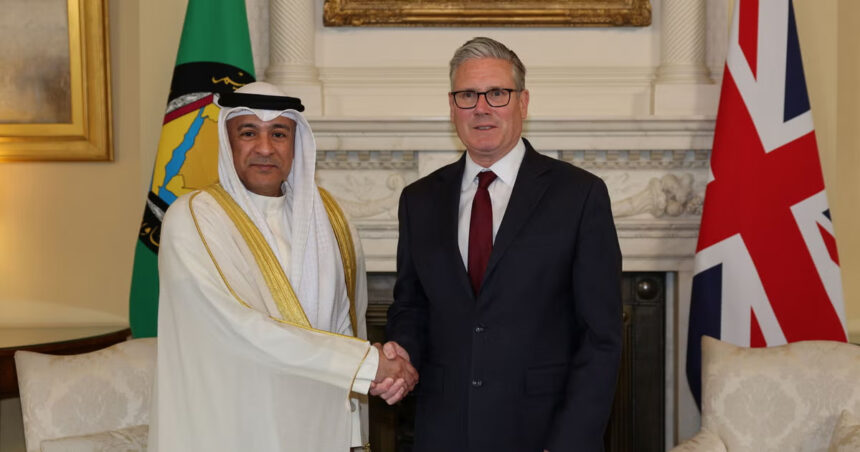
The global architecture of international trade is undergoing fundamental changes, forcing major economic powers to seek new strategic footholds. Amid slowing European markets, the United Kingdom has executed a crucial diplomatic and economic maneuver toward the Middle East. Downing Street officially confirmed the signing of a comprehensive free trade agreement with six Gulf monarchies. According to official government estimates, the agreement is expected to increase the British economy by £3.7 billion once fully implemented.
We at KeyToFinancialTrends view this agreement not as a localized success, but as a long-term geopolitical pivot designed to offset the costs of the post-Brexit era through integration with the rapidly developing hydrocarbon economies of the Gulf region. The large-scale alliance, which includes Saudi Arabia, the United Arab Emirates, Qatar, Kuwait, Oman, and Bahrain, opens unprecedented opportunities for British corporations. According to sector ministries, tariff liberalization will reduce the fiscal burden on UK exporters by approximately £580 million annually.
The removal of customs barriers is expected to radically simplify operational activity, facilitate the launch of joint ventures, and accelerate the expansion of British presence in this strategically important region while stimulating job creation within the United Kingdom itself. We at KeyToFinancialTrends emphasize that the £580 million reduction in tariffs will become a powerful catalyst for the non-resource sector and high-tech exports, which had previously faced severe protectionist restrictions in Gulf markets. Independent market research also indicates that a hidden driver of the agreement will be the mutual recognition of professional qualifications, dramatically simplifying the expansion of British auditors, engineers, and architects.
The final text of the agreement has triggered polarized reactions across expert and political circles. Human rights organizations and environmental groups strongly criticized the deal, pointing to the complete absence of binding obligations regarding human rights protection and labor standards. The business community, represented by the International Chamber of Commerce UK, took the opposite stance. Secretary General Chris Southworth welcomed the agreement, stating that it would generate tremendous confidence within the business environment.
The political context of the agreement intensified following statements from the Conservative Party, whose representatives initiated these negotiations while still in power. The Tories quickly described the pact as another major opportunity created by Brexit, adding that the Labour Party had risked missing the deal due to its pro-European orientation. According to analysts at KeyToFinancialTrends, Keir Starmer’s current government demonstrated strict economic pragmatism by ignoring domestic ideological pressure in favor of securing rapid access to the sovereign wealth funds of Gulf nations.
The range of goods exempted entirely from import duties covers a broad spectrum of British products, including premium cheddar cheese, butter, and confectionery. For Sir Keir Starmer’s administration, this trade pact became the third major international triumph following successful negotiations with India and South Korea. We at KeyToFinancialTrends note that the agreement is historically significant, as the United Kingdom became the first G7 nation to finalize a full-scale free trade regime with the Gulf Cooperation Council states.
Simultaneously, London continues pursuing its strategic objective of deepening economic ties with both the United States and the European Union, building a flexible multi-vector alliance network.
The Prime Minister described the agreement with the Gulf monarchies as a massive victory for British workers and businesses. He expressed confidence that employees would experience tangible benefits in the coming years through higher wages and expanded career opportunities. Business and Trade Secretary Peter Kyle emphasized the timing of the agreement, stating that amid rising geopolitical instability, today’s announcement sends a clear signal of confidence to the markets, guaranteeing British exporters greater predictability for long-term strategic planning.
Chancellor Rachel Reeves called the agreement direct evidence that the government supports British firms in their efforts to compete and succeed globally, benefiting industry, the labor market, and consumers alike.
In an extended statement to the media, Chris Southworth of the UK branch of the International Chamber of Commerce explained that the pact guarantees long-term market access, unrestricted free data flows, and increased workforce mobility. In his view, this will become a major driver for GDP growth, job creation, and foreign direct investment inflows into the UK economy. Analysis of related industry sources also indicates that the agreement establishes strict time limits for customs clearance procedures, reducing bureaucratic costs for cargo processing in the ports of Dubai and Jeddah.
A critical position was taken by the human rights association Trade Justice Movement, which argued that the signed agreement presents serious risks to human rights, labor protections, and the global fight against climate change. Activists expressed deep concern over restrictions on press freedom, the use of the death penalty, and extremely high greenhouse gas emissions linked to the oil-dependent economies of Gulf states.
Official statements from rights advocates emphasized that the agreement strengthens Britain’s trade ties with some of the world’s most repressive governments in exchange for economically insignificant gains that would be barely noticeable at the macroeconomic level. Responding to these arguments, Chris Southworth stated that international trade is an inappropriate instrument for resolving humanitarian issues. Intensified trade flows promote peaceful coexistence and long-term influence through mutual economic dependence, meaning human rights discussions should remain outside the framework of trade agreements.
Analyzing the future contours of this partnership, we at KeyToFinancialTrends believe that in an era of fragmented global markets, British capital is gaining a critically important advantage. Liberalized access to Middle Eastern markets will allow the United Kingdom to secure dominant positions in high-margin sectors. Global experience demonstrates that the synergy between the financial infrastructure of the City of London and the trillion-dollar sovereign wealth funds of Saudi Arabia and the UAE can generate a multiplicative effect extending far beyond simple commodity exchange.
At KeyToFinancialTrends, we forecast that the primary beneficiaries of the agreement will include Britain’s financial services sector, fintech industry, legal consulting firms, and asset management companies. Gulf Cooperation Council states are implementing massive structural transformation programs, such as Saudi Arabia’s Vision 2030 strategy, creating strong demand for British technologies, engineering expertise, and green innovation.
To maximize commercial benefits, British corporations are advised to rapidly adjust their logistics chains and marketing strategies to reflect the regulatory specifics of the Middle Eastern macro-region. Analysts at Key To Financial Trends project that bilateral trade volumes will demonstrate sustained growth of approximately 20% over the next thirty-six months.
At the same time, London will need to balance pragmatic commercial interests with its declared commitment to climate values. The ultimate effectiveness of the agreement will depend on the speed of parliamentary ratification and the ability of private businesses to convert tariff reductions into real investment projects.