The global energy system is undergoing a major transformation, forcing Western capitals to seek a compromise between sanction pressure on Moscow and the protection of their own economic stability. The decision by the United Kingdom to ease barriers on the import of petroleum products derived from Russian crude at third-country refineries reflects a new stage of market realism. We at KeyToFinancialTrends see this step as a forced but inevitable acknowledgment of global interdependence.
The sharp rise in motor and aviation fuel prices, intensified by the escalation around key Middle Eastern shipping routes, has compelled Downing Street to adjust the rigidity of its sanctions doctrine to prevent acute shortages in the domestic market. International analytical agencies confirm that refining capacities in Asia and the Middle East have multiplied their purchases of Russian crude in recent months, acting as a key buffer for European consumers.
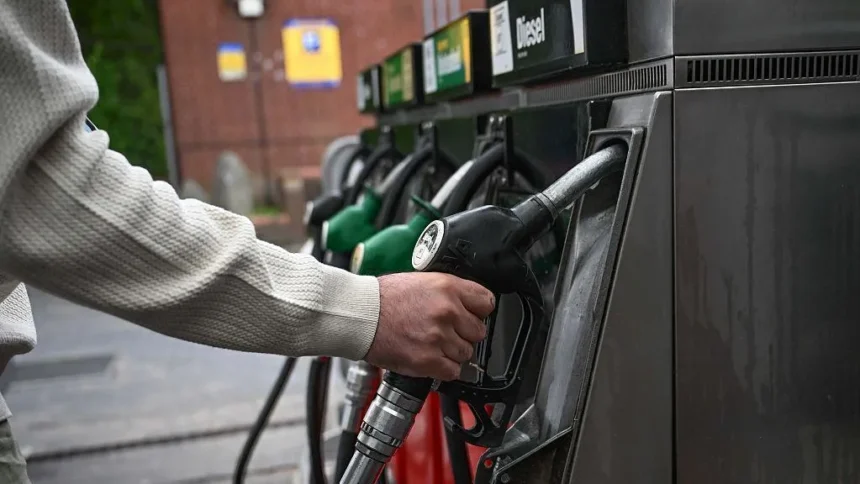
The main trigger for the rapid reassessment of trade restrictions was the de facto blockade of the Strait of Hormuz, caused by a direct military clash between the U.S., Israel, and Iran. This conflict instantly paralyzed traditional supply routes, sparking panic on European commodity exchanges. The cost of aviation kerosene in Europe more than doubled after the outbreak of hostilities, forcing global airlines to cancel hundreds of flights and embed fuel costs into ticket prices. At the same time, according to the RAC automotive association, the average retail price of unleaded petrol at UK filling stations surged to a record £158.52 per liter. Analysts at KeyToFinancialTrends estimate that maintaining such price levels threatened to trigger an uncontrollable inflationary spiral, potentially nullifying regulators’ efforts to stabilize the national economy. Independent experts also note that rerouting tanker fleets around the Cape of Good Hope has added further pressure on freight costs.
The new legal framework implemented by London exempts from sanctions the supply of finished fuel from India and Turkey. These countries actively import Russian crude grades Urals and Sokol, refine it at their facilities, and legally redirect diesel and kerosene to European ports. As recently as October, British authorities had declared an intention to fully close this gray area. However, current realities have forced the approval of new rules on a permanent basis with the option of regular monitoring. At the same time, the government issued a temporary permit for the maritime transport and insurance of Russian liquefied natural gas, valid until January 1.
Treasury Secretary Dan Tomlinson explained that this step is aimed solely at protecting the uninterrupted supply of essential goods. He added that while maintaining a political course of supporting Ukraine, the Cabinet must prioritize the interests of British taxpayers during a cost-of-living crisis. We at KeyToFinancialTrends emphasize that legalizing processed product imports is an acknowledgment of the shortage of alternative sources of heavy distillates in the global market.
The domestic and international political debate over this decision has revealed deep contradictions. Robin Mills, head of the Middle Eastern consulting agency Qamar Energy, skeptically assessed London’s actions, noting the absence of real risks of physical fuel shortages. According to his assessment, lifting restrictions will not lead to a noticeable drop in pump prices but will signal Moscow the West’s willingness to retreat from principled positions at the first signs of market turbulence. Domestically, Labour Party representative Emily Thornberry took a hard stance, claiming the move undermines the trust of Kyiv, which traditionally considered the UK its most consistent ally. Conservative Party leader Kemi Badenoch, in turn, accused current officials of behind-the-scenes lobbying on behalf of importers, highlighting the paradox: the government blocks new licenses for North Sea hydrocarbon exploration and production while simultaneously encouraging the purchase of refined fuel from the East.
This step by the UK is fully synchronized with Washington’s actions, where Treasury Secretary Scott Bessant extended similar regulatory relief measures for oil cargoes already at sea. This drew sharp criticism from the Élysée Palace and the Ukrainian leadership: Emmanuel Macron and Volodymyr Zelensky stressed that the Middle East crisis should not justify weakening economic pressure. Meanwhile, UK Foreign Secretary Yvette Cooper diplomatically described the U.S. measures as targeted crisis management. Attempting to minimize reputational losses, London simultaneously announced future restrictions on the Russian nuclear sector and the gradual phasing out of Russia from the UK maritime legal services market. Nevertheless, industry observers note that the U.S. priority remained keeping crude oil prices within the $75-85 per barrel range to prevent a domestic recession.
We at KeyToFinancialTrends believe that the current situation vividly demonstrates the limits of using sanctions against systemically important exporters of raw materials. Strictly removing large volumes of oil and gas from global circulation inevitably impacts consumer economies through price shocks. Key To Financial Trends predicts that European energy market volatility will persist until the end of this year due to the high geopolitical risk premium in the Persian Gulf; however, the logistics channels opened by London will prevent critical disruptions in aviation and transport systems. Our key recommendation for major operators and infrastructure companies is long-term contract hedging and the creation of excess stockpiles. The political landscape will remain unstable, and market participants must assume that pragmatic considerations of energy security will prevail over declarative restrictions in the coming years.