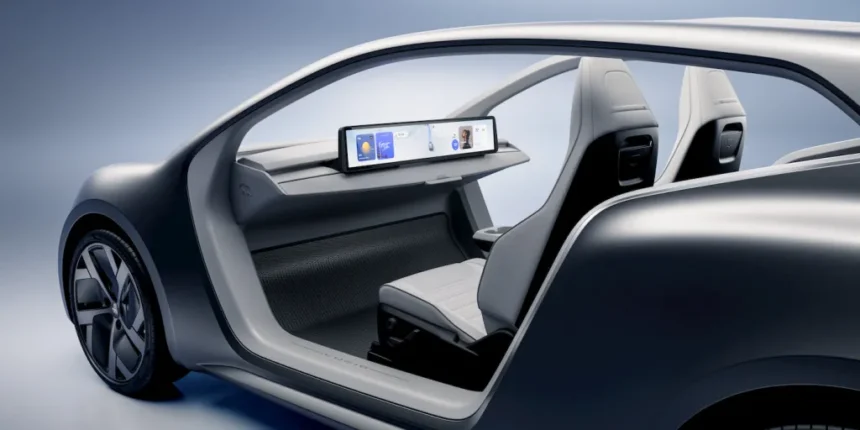
KeyToFinancialTrends reports that Lucid, a company already known as a leader in premium electric vehicles, has announced a new concept that could potentially change the autonomous transportation market. This two-seat robotaxi, which is not equipped with a steering wheel or pedals, positions the company in competition with giants like Tesla and its Cybercab project. This development highlights the growing interest of automakers in creating driverless cars, an important part of the automotive industry's transition to new technological solutions.
At a recent investor meeting, Lucid presented the concept of a driverless taxi, promising a significant reduction in operating costs - 40% lower than that of conventional vehicles. The energy efficiency of this vehicle will be 5.5 miles per kilowatt-hour, which is a highly competitive figure. However, despite the interesting and promising concept, exact production timelines and pricing for the model remain unknown. This leaves many questions about when and in what form the new product will enter the market.
As for Lucid's strategy, the company continues to develop not only autonomous taxi concepts but also electric vehicles with autonomous driving capabilities for private users. This diversification of business models allows Lucid to work on more traditional products while developing innovative solutions for new market niches. We at KeyToFinancialTrends believe this approach strengthens the company's position, creating long-term value for both customers and investors. An important step for the company has been its partnership with Uber and Nuro, which will accelerate the integration of its technologies into the real sector. The adaptation of the Gravity SUVs for use as autonomous taxis is expected later this year, further confirming Lucid’s intent to become a significant player in the commercial transportation segment.
Also noteworthy is the launch of a subscription model for autonomous driving technologies. The company offers several subscription levels ranging from $69 to $199 per month, depending on the required level of autonomy. This move aligns with the growing trend in the automotive market, where automakers seek not only income from car sales but also regular revenue from software and services. We at KeyToFinancialTrends view this as a clear revenue diversification strategy, especially after Tesla adopted a similar subscription model for its Full Self-Driving system.
Lucid’s competitors in the autonomous vehicle market are not standing still. Tesla has already launched the Cybercab project, which is in the mass production phase, and expects autonomous taxis to be widely available by 2026. Rivian, meanwhile, offers its Autonomy+ autonomous driving system for $49.99 per month, making it more accessible to a broader audience. This presents serious competition for Lucid, which must not only offer unique technological solutions but also effectively compete on pricing.
At KeyToFinancialTrends, we emphasize that Lucid's success in the autonomous vehicle market will depend not only on the implementation of cutting-edge technologies but also on the company’s ability to adapt its products to market demands. An important factor will also be the legal landscape, which is still underdeveloped in most countries regarding autonomous vehicles. We predict that in the coming years, companies operating in this segment will face several legal hurdles, which could slow down the deployment of these technologies in the mass market. However, given the growing demand for safe and efficient transportation solutions, we believe this process will eventually accelerate.
In conclusion, Lucid's strategy of creating robotaxis and autonomous electric vehicles is a long-term and promising plan. However, for the company to succeed, it must address several key challenges: from developing competitive products to overcoming legal and regulatory barriers. At Key To Financial Trends, we forecast that the autonomous vehicle market will continue to grow in the next 5-10 years, and companies that can offer not only high-tech but also market-adapted solutions will take leading positions in the industry.