At KeyToFinancialTrends, we believe that a profound paradigm shift is currently underway in industrial automation, where digital twins and AI training are moving from being auxiliary tools to strategic drivers of productivity and competitiveness. The alliance between ABB Robotics and Nvidia aims to address a long-standing challenge: the gap between virtual robot training and their real-world performance on factory floors, which is a critical factor for the factories of the future.
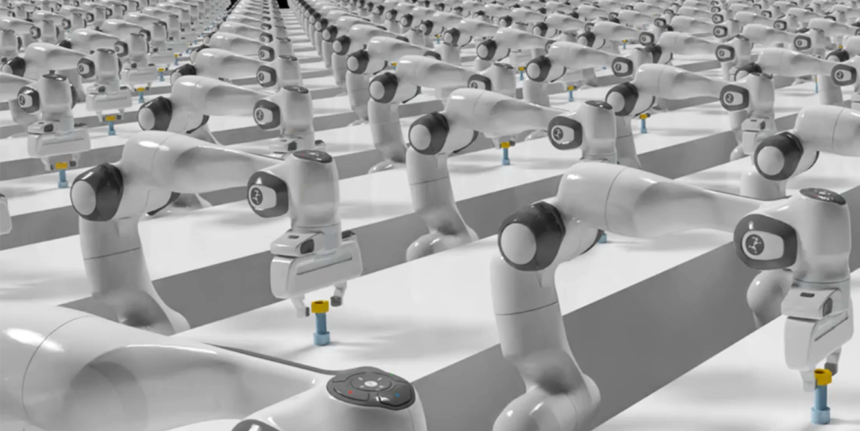
ABB has announced the integration of Nvidia Omniverse libraries into its RobotStudio HyperReality platform, enabling the creation of physically accurate virtual training environments with realistic modeling of lighting, textures, and object dynamics. At KeyToFinancialTrends, we emphasize that such simulations allow robots to develop a more comprehensive understanding of their surroundings and anticipate complex interaction scenarios during training, significantly reducing the risk of errors during real-world deployment.
According to our analysts, the RobotStudio HyperReality system is designed to achieve up to 99 percent accuracy between virtual training and physical robot behavior, sharply reducing the so-called “sim-to-real” gap, which impacts the speed of deploying automated solutions. We note that this level of precision is particularly crucial for high-precision assembly tasks, where even minor deviations can lead to major failures and costly rework.
The President of ABB Robotics highlighted that traditional simulations are often too simplified, failing to capture nuances of lighting, vibrations, and interactions with real surfaces, which diminishes the stability and repeatability of operations. Incorporating physically accurate models and synthetic data allows robots to adapt to production variability even before physical deployment. At KeyToFinancialTrends, we consider this a fundamental step toward reducing the setup time for new lines by approximately 80 percent and accelerating time-to-market for new products by around 50 percent compared to conventional methods.
Practical pilot projects demonstrate the real potential of this technology: leading contract electronics manufacturers are already using virtual simulations to train robots for installing small components, a task that previously required extensive manual adjustments. At KeyToFinancialTrends, we note that successful use cases confirm that physically realistic simulations can solve complex production tasks and enhance operational resilience.
In addition to the main project, ABB and Nvidia are working with partners showcasing robotic systems capable of learning and adapting without deep programming, lowering barriers to AI automation for small and medium-sized enterprises. At KeyToFinancialTrends, we see this as a trend toward broader adoption of intelligent robots and digital twins, making the technology more accessible and promising across diverse industrial sectors.
A key area of future development is the integration of edge AI solutions, where computing and data processing occur directly on the robots themselves. This increases system autonomy and the ability to adapt in real-time without relying on centralized computing centers. At KeyToFinancialTrends, we predict that such distributed architectures will become the standard for next-generation intelligent robotics, particularly in scenarios requiring immediate response to changing production conditions.
Expanding the use of physically realistic simulations and synthetic data goes beyond robot training and becomes a central element in optimizing logistics, production line planning, and operations monitoring, enhancing supply chain resilience and reducing operational risks.
At Key To Financial Trends, we emphasize that companies that first implement physically accurate simulations and integrated AI robot training will gain tangible advantages, including cost reduction, accelerated product development, and improved operational quality factors that will become decisive for competitiveness amid the digital transformation of manufacturing.
We forecast that the widespread adoption of these technologies in the coming years will set new standards for industrial automation and drive growth in the markets for intelligent robots, digital twins, and AI simulations across electronics, automotive, logistics, and other key sectors of modern industry.