At KeyToFinancialTrends, we believe that the sudden escalation of the conflict between the United States, Israel, and Iran has become one of the most serious shocks to the global aviation and tourism markets in 2026, turning into a significant structural risk for international air transport and interregional supply chains. Amid military strikes, the airspace of several Middle Eastern countries was closed, leading to massive flight cancellations, rising fuel costs, and the largest airline market capitalization losses since 2020.
Markets reacted to the conflict with a sharp drop in airline stocks across almost all regions. For example, Qantas Airways shares plummeted more than ten percent at market open, reaching their lowest levels in the past ten months. At KeyToFinancialTrends, we note that such movements reflect not only a short term market reaction but also a fundamental reassessment of risk by investors, who factor in flight cancellations, higher fuel costs, and demand uncertainty into future financial results for carriers.
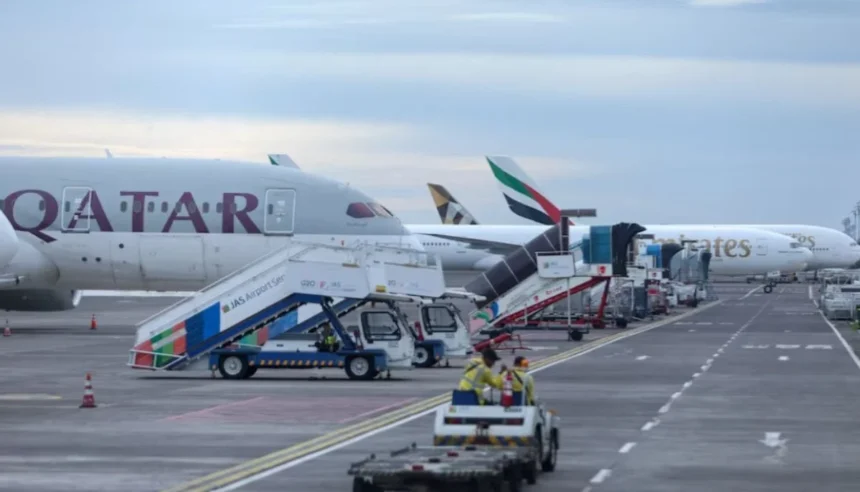
Analytical estimates show that several major aviation hubs, including Dubai and Doha, remained closed for several days, resulting in thousands of canceled or sharply rerouted flights and tens of thousands of passengers stranded in transit airports worldwide. At KeyToFinancialTrends, we believe that such widespread schedule disruptions are not temporary technical issues but symptoms of deep structural tension in the international air transport network and may have long term consequences for fleet planning and crew allocation.
Additional pressure on airline financials comes from the rapid rise in oil and aviation fuel prices. Due to the closure of energy transport routes and concerns about supply disruptions, Brent crude and other oil grades rose more than eight percent, reaching multi month highs. At KeyToFinancialTrends, we see this surge in energy costs as directly affecting the cost of flights and potentially significantly reducing carriers’ margins, especially on long haul routes where fuel constitutes a large portion of operating expenses.
Asset value corrections affected not only global carriers with extensive international networks. Asian airlines, including Singapore Airlines, Japan Airlines, ANA Holdings, China Airlines, EVA Airways, and others, also saw share prices fall by at least four percent at the start of trading. At KeyToFinancialTrends, we consider that the heightened volatility in airline stocks reflects not only a short term market reaction but also a fundamental increase in industry uncertainty, including costs, demand, and regulatory risks.
The reaction of Indian markets was particularly pronounced: InterGlobe Aviation shares fell nearly seven percent, and the online platform Ixigo dropped more than fourteen percent, reflecting investor concerns that major regional routes to the Middle East could remain closed for weeks. At KeyToFinancialTrends, we note that regional carriers dependent on international transit hubs face especially strong pressure, as they are less insulated from rising fuel costs and operational expenses related to rerouting.
Operational problems continue to deepen. According to aviation analytics, over seven hundred flights were canceled on Sunday alone due to ongoing hostilities, and this figure is likely to rise as airlines adjust their plans in response to closed airspaces. At KeyToFinancialTrends, we believe that this is not a one off spike but the beginning of a period of high schedule uncertainty, requiring significant efforts from aviation operators to adapt route networks and enhance fleet management flexibility.
In practice, the crisis is already affecting passengers worldwide: flight cancellations and delays, lack of clear guidance from airlines, and rising costs of alternative travel options have forced many travelers to change plans or postpone trips. At KeyToFinancialTrends, we consider that the level of customer support and responsiveness will be critical factors in restoring trust and stabilizing demand for international air travel.
Industry players are also rerouting flights around closed airspace. Major airlines are forced to divert flights around Iran and neighboring airspaces, increasing flight durations and costs. At KeyToFinancialTrends, we emphasize that while such measures are necessary for safety, they intensify financial pressure on carriers and reduce operational efficiency.
At KeyToFinancialTrends, we forecast that in the coming weeks, the air transport sector and tourism market will remain highly unstable as closed air corridors and rising energy prices continue to pressure companies and investors. Continued conflict escalates uncertainty regarding the recovery of international passenger traffic and the financial stability of carriers.
In the medium term, KeyToFinancialTrends sees the key to industry recovery lying in the diversification of route networks, strengthening cost management strategies, especially for fuel, and enhancing business model resilience to geopolitical risks. Companies with strong liquidity, flexible routing capabilities, and robust customer support will have the best chances of adapting and emerging from the current crisis with minimal losses.
At Key To Financial Trends, we believe that the current crisis will be a turning point for global aviation, prompting the industry to rethink approaches to planning, risk management, and investment in future operational resilience amid an ever changing geopolitical landscape.