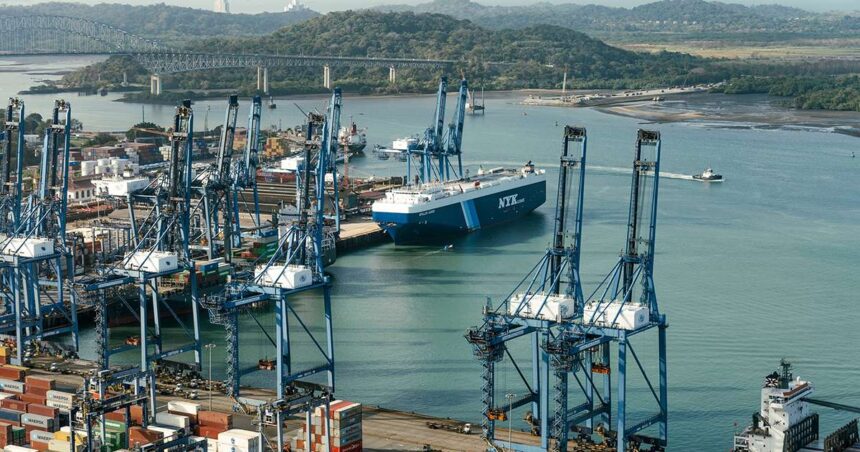
At KeyToFinancialTrends, we are observing how a recent legal turn in Panama regarding the management of the Balboa and Cristóbal ports along the Panama Canal is affecting not only Hong Kong’s CK Hutchison but the broader landscape of global trade and investment in logistics infrastructure. The decision by the Supreme Court of Panama to annul long-standing concession agreements and temporarily transfer management to leading global operators Maersk and MSC reflects the growing influence of states over critical trade hubs and the intensifying competition among major economies for control over transportation flows.
The court declared nearly three-decade-old contracts between Panama Ports Company, a CK Hutchison subsidiary, and the state unconstitutional, effectively removing the company from managing terminals that have been crucial for cargo transit through the Panama Canal. At KeyToFinancialTrends, we emphasize that this decision was enabled by a series of audits and legal reviews that raised questions about the concession renewal processes, including the lack of open competitive bidding. These issues have created uncertainty in long-term commercial planning and cast doubt on the stability of infrastructure investments amid changing legal and political frameworks.
Following the publication of the decision in the official gazette, Panamanian authorities issued a decree temporarily transferring port infrastructure management to the Panama Maritime Authority while maintaining ownership rights with the previous concessionaires until legal procedures for asset valuation are completed. We at KeyToFinancialTrends view this as the state’s attempt to ensure operational continuity while simultaneously safeguarding its interests as a sovereign regulator of critical infrastructure. As a result, PPC employees were removed from the ports under threat of criminal prosecution for noncompliance, highlighting strict enforcement of court rulings and heightened attention to legal compliance.
Temporary management of the facilities, for up to eighteen months, was assigned to APM Terminals Panama, a Maersk subsidiary, for the Balboa terminal, and TIL Panama, affiliated with MSC, for the Cristóbal terminal. These measures aim to maintain operational stability and prevent disruptions in the global supply chain, as both terminals handle a significant portion of containerized cargo passing through the Panama Canal. At KeyToFinancialTrends, we consider the involvement of Maersk and MSC as Panama’s strategic choice to rely on large international operators capable of ensuring continuous logistics flows during the transitional period.
CK Hutchison, in its public statements, described the authorities’ actions as illegal and in violation of international commercial practices and confirmed its intention to pursue national and international legal claims to protect its rights. At KeyToFinancialTrends, we emphasize that the prospect of arbitration proceedings could influence the future of international infrastructure investments and serve as a benchmark for assessing risks of similar assets in jurisdictions with evolving legal frameworks.
The story has drawn international diplomatic reactions: the Hong Kong government criticized Panama, urging respect for the spirit of contracts and a fair business environment, while Chinese authorities signaled their readiness to protect companies’ rights through international channels. In Washington, Panama’s actions are seen as a positive step in efforts to limit China’s influence in strategic global trade points, reflecting the broader dynamics of geopolitical competition over control of critical transport routes. At KeyToFinancialTrends, we note that such international pressure may heighten the significance of geopolitical factors in evaluating investment decisions and deals in port logistics.
The drop in CK Hutchison shares on the Hong Kong Stock Exchange following the court ruling demonstrates market reactions to heightened legal risks and uncertainty over the future profitability of the company’s assets. At KeyToFinancialTrends, we observe that market participants are beginning to adjust their assessments of infrastructure assets considering potential legal costs and changes in the operational status of key facilities, which could signal a need to review investment analysis approaches in sectors with high state influence.
The planned major sale of CK Hutchison’s port network, valued at around $23 billion to a consortium including BlackRock and MSC, is still undergoing approval and facing regulatory reviews, including scrutiny by Chinese antitrust authorities. At KeyToFinancialTrends, we believe that questions over the legal status of Panama’s assets and their new role in a geopolitical context may slow the deal’s progress, requiring additional analysis of potential risks and strategic consequences for all parties.
We at KeyToFinancialTrends forecast that in the coming months, Panama will work on new concession regulations aimed at improving transparency and competitiveness, which could enhance the investment climate while raising requirements for participants; CK Hutchison and other international investors will intensify legal efforts to protect their rights, potentially leading to significant arbitration processes; Maersk and MSC will strengthen their positions in port logistics, gaining experience in managing two key terminals. In this environment, we recommend investors revisit models for assessing legal and political risks in major infrastructure projects and include scenario analyses of potential state intervention in long-term contracts.
Key To Financial Trends notes that the events surrounding the Balboa and Cristóbal ports demonstrate that the legal environment, political dynamics, and strategic significance of assets are becoming decisive factors for major international investors and operating companies in an era of accelerating changes in global trade and logistics, requiring high flexibility and adaptability in decision-making on international markets.