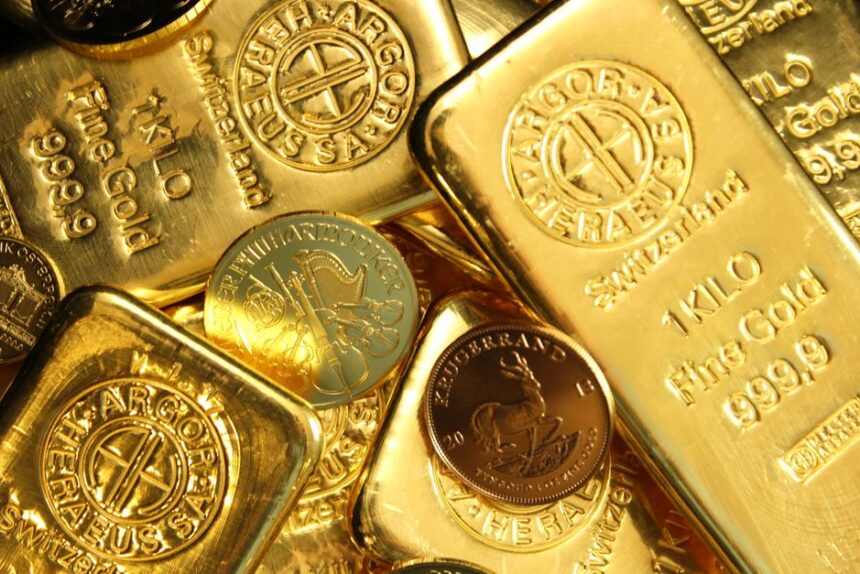
Gold futures climbed sharply on CME Group markets after diplomatic signals suggested a potential easing of tensions around the Strait of Hormuz, the narrow waterway through which roughly 20% of the world's traded oil passes. The move in precious metals reflected a rapid repricing of inflation risk across commodity and fixed-income markets, with traders adjusting positions built on the assumption that prolonged geopolitical disruption would keep energy costs elevated and central bank policy tighter for longer.
The Strait of Hormuz sits at the intersection of energy security and monetary policy in a way few geographic chokepoints can match. When oil flows freely through it, global supply chains absorb the volume without significant price distortion. When transit is threatened, crude benchmarks spike, freight costs rise, and the inflationary impulse spreads through consumer price indices across importing economies within weeks. The prospect of a diplomatic arrangement reducing that threat therefore carries direct implications for the global economy - not merely as a geopolitical footnote, but as a variable feeding directly into central bank calculations.
Gold's reaction to easing Hormuz tensions may appear counterintuitive at first. Conventionally, gold rallies on fear and retreats when risk appetite returns. The current move, however, reflects a more layered dynamic. If reduced energy disruption translates into lower oil prices, headline inflation in major economies could fall faster than previously projected. That scenario would give the Federal Reserve and peer central banks more room to consider rate cuts without reigniting price pressures. Lower interest rates reduce the opportunity cost of holding gold, which pays no yield, making the metal more attractive relative to interest-bearing assets.
According to KeyToFinancialTrends analysts, the gold market is effectively pricing in a scenario where disinflation accelerates through the second half of the year, compressing real yields and weakening the dollar - a combination that has historically supported gold prices even in the absence of acute geopolitical stress.
The Federal Reserve has maintained its benchmark rate in restrictive territory through 2024 and into 2025, citing persistent services inflation and a resilient labor market. The IMF's April 2025 World Economic Outlook projected global GDP growth at 2.8% for 2025, a downward revision reflecting the drag from elevated borrowing costs and softening trade volumes. The World Bank has similarly flagged that prolonged high interest rates risk tipping several emerging market economies into contraction, particularly those carrying dollar-denominated debt.
Energy prices remain one of the most direct transmission channels between geopolitical events and consumer inflation. A sustained reduction in Hormuz-related risk premiums embedded in crude oil would ease cost pressures across transportation, manufacturing, and food production simultaneously. For economies where energy comprises a significant share of the consumer price basket - including much of the eurozone and large parts of Asia - the disinflationary effect could be meaningful within one to two quarters.
Global trade patterns have already been under strain from a separate front: tariff escalation between the United States and its major trading partners. The IMF has estimated that the cumulative effect of recent tariff increases could shave several tenths of a percentage point from world GDP growth, compounding the slowdown already visible in export-dependent economies. A reduction in energy cost pressures would not neutralize the tariff drag, but it could offset part of the inflationary component, giving central banks a cleaner path toward monetary policy easing without sacrificing credibility on inflation targets.
In KeyToFinancialTrends' assessment, the convergence of potential energy disinflation with existing tariff-driven trade headwinds creates an unusually complex environment for monetary policy. The Federal Reserve and the European Central Bank face a situation where two major inflationary forces are moving in opposite directions simultaneously, making forward guidance exceptionally difficult to calibrate.
The recession risk calculus also shifts under this scenario. Several leading indicators, including inverted yield curves in the United States and declining manufacturing PMIs across Europe, have pointed toward slowing momentum. If energy disinflation materializes and central banks respond by easing rates earlier than markets previously expected, the probability of a hard landing diminishes - though it does not disappear. Credit conditions remain tight, consumer savings buffers built during the pandemic period have largely been drawn down, and corporate earnings revisions in rate-sensitive sectors have trended negative.
Investors positioning around this development face genuine uncertainty. The diplomatic signals around the Strait of Hormuz have not yet translated into a binding, verifiable agreement, and the history of Gulf geopolitics offers ample precedent for rapid reversals. Oil markets have not fully priced out the risk premium, suggesting traders are treating the development as a probability shift rather than a resolved outcome.
The practical implication for portfolio strategy is that gold's current rally may be durable if real yields decline on the back of faster disinflation, but vulnerable if energy disruption resumes or if central banks signal that they intend to hold rates higher regardless of headline inflation improvements. KeyToFinancialTrends sees the trend as one that warrants close monitoring of both Federal Reserve communication and verified developments in Hormuz transit conditions over the next several weeks, as these two variables will likely determine whether the current repricing in gold and rate expectations holds or reverses.